I find that the jointer is one of the most complex tools to calibrate. But if you ever used one that was out of shape, you know exactly why calibration is critical to your success. I hear from so many woodworkers who think their jointing problems are due to technique, when in reality, its the jointer itself that’s presenting the issues.
Its a two-part process that starts with leveling the infeed and outfeed tables and making them coplanar. Next, you need to adjust the knives in the cutterhead so that they are in line with the outfeed table. Neither process is fast, but I’ll take you through it step by step.
Hidden inside this video is actually a bit of a product review. There are many jigs on the market that will help you set up your jointer knives. I wanted to try a few of them so that I could give you a recommendation one way or the other. Here are my biased and opinionated findings:
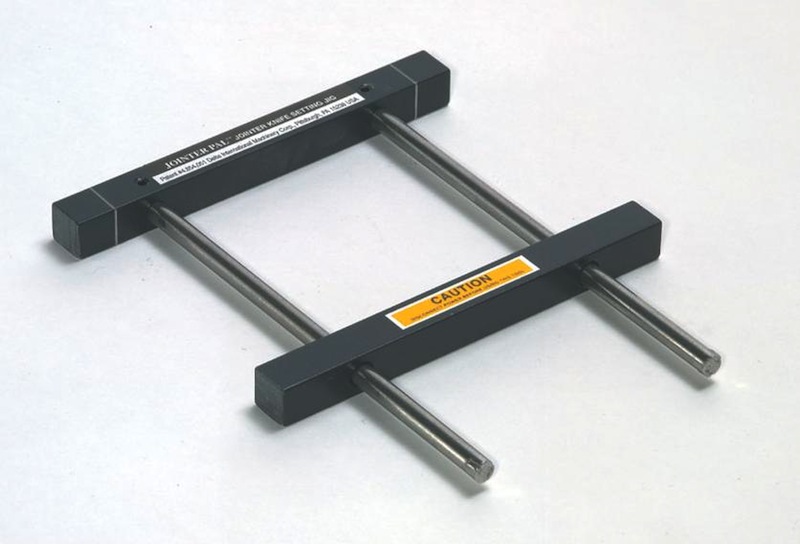 Jointer Pal – ($27-$84) This is the jig I’ve been using for years. Its perfect for folks who don’t want to fuss around with dial indicators since the magnet does all the work. And it is fast and easy to use (about 3 minutes per blade). But since jointer blades tend to raise up when you tighten them in place, you have no way of knowing if your blades truly are level with the outfeed table. Mine showed a variance of .001-.005 across the length of the blade. All in all, that’s not to bad considering the quick setup time. But its far from perfect. And in order to use this jig properly, you have to find the top dead center of the blade’s path, which is usually easier said than done.
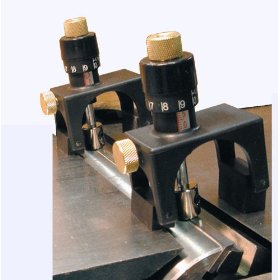 MLCS 9397 Jointer Planer Knife Setting Jig ($79) – By far, my biggest disappointment in the test. Like the Jointer Pal, this system works using magnets, only this one bridges the infeed and outfeed tables. It also has a nice dial that you turn to raise and lower the center magnet, which allows you to micro-adjust the blade. But I found that the blades still move when they are tightened down and the magnets didn’t provide enough force to prevent this from happening. This pretty much defeats the purpose of the micro adjustments. Furthermore, I don’t see how this would be useful as a standalone jig. You still need a dial indicator to tell you what the height of the blade is relative to the outfeed table. Otherwise, you are pretty much flying blind. And unlike the Jointer Pal, there is no built-in reference point. So I am going to recommend skipping this product.
 OneWay Multi-Gauge ($94) – Essentially this is just a variation of the classic dial indicator jig. But holy moly is this thing awesome! The jig is incredibly heavy and has a nice wide foot-print. The dial indicator features a wide flat foot that is critical for setting the knives. The standard tapered tip that comes with most dial indicators just won’t do. The dial indicator itself is mounted in such a way that it faces you, which is incredibly convenient when setting knives. This unit is absolutely rock solid. But in my shop, its use will most likely be limited to setting up the jointer, the planer, and the drum sander.
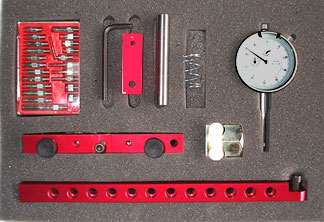 Deluxe A-Line-It ($145) – This is another variation of the dial indicator system, only this unit does a bunch of other things too. It truly is a jack of all trades setup jig and will help you calibrate everything from the tablesaw, to the drill press, to the bandsaw! The dial indicator comes with numerous tips, including a flat one. So how does it compare to the ONEWAY? Its lighter and less stable due to the 3/4″ wide aluminum base. The foot on the dial indicator is not as wide as the ONEWAY, which is not a huge problem but that extra width is truly appreciated. And the dial on this unit faces the infeed table, instead of the user. Seems like a minor thing until you have to stand up to view the gauge head-on about 40-50 times.
So my final verdict? If you want cheap and simple with somewhat unpredictable results, go for the Jointer Pal. If you want a jack of all trades setup jig, go for the A-Line-It. And if you want the best jig for the job, get the ONEWAY. And if you don’t want to deal with any of this crap, get a helical head!
Products Used