This weeks question comes from Yoann.
What is the difference between “water-based” and “waterborne” finishes, is it the same? If not, can any finish be either water-based or waterborne? Thanks for the clarification !!
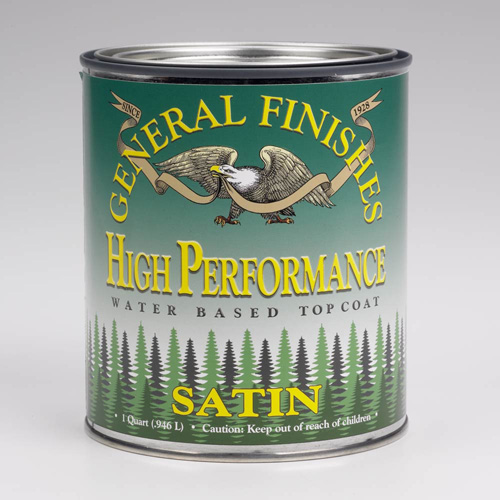 Hey Yoann. Great question! This is just another example of labels not doing us any favors! As most people use it, the term “water-based” is pretty much a misnomer. To call something water-based suggests that you can redissolve it in water, which is not the case with these finishes. These water-containing finishes are actually still solvent based. And if memory serves me, I believe the reason folks started calling them “water-based” was to distinguish them from traditional solvent-based finishes.
So how do these finishes work? The most common mixtures generally contain three main components: the polyurethane or acrylic, a solvent (usually glycol ether), and water. After the finish is applied to a surface, the water begins to evaporate. Soon after, the solvent evaporates and the finish particles fuse together to become a single layer. So even though these finishes are solvent-based, water is the carrier, hence the term, “water-borne”.