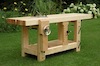
With the end cap attached and in position, we can turn our attention to the dog hole strip. The dog hole strip is glued to the front of the bench and then the longer front laminate strip gets glued to that. The front laminate strip also ties into the end cap with a honkin’ set of dovetails. So let’s get to it!
The Dog Strip
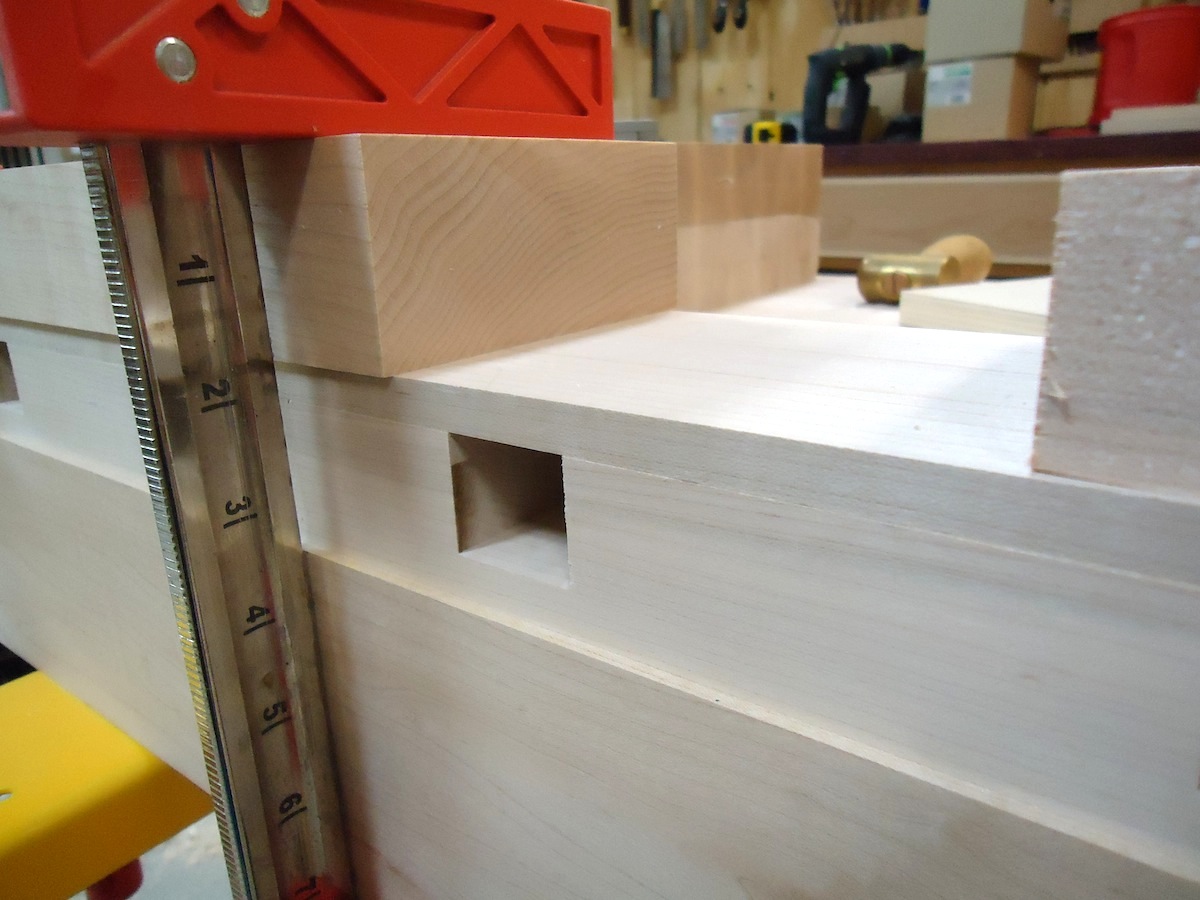
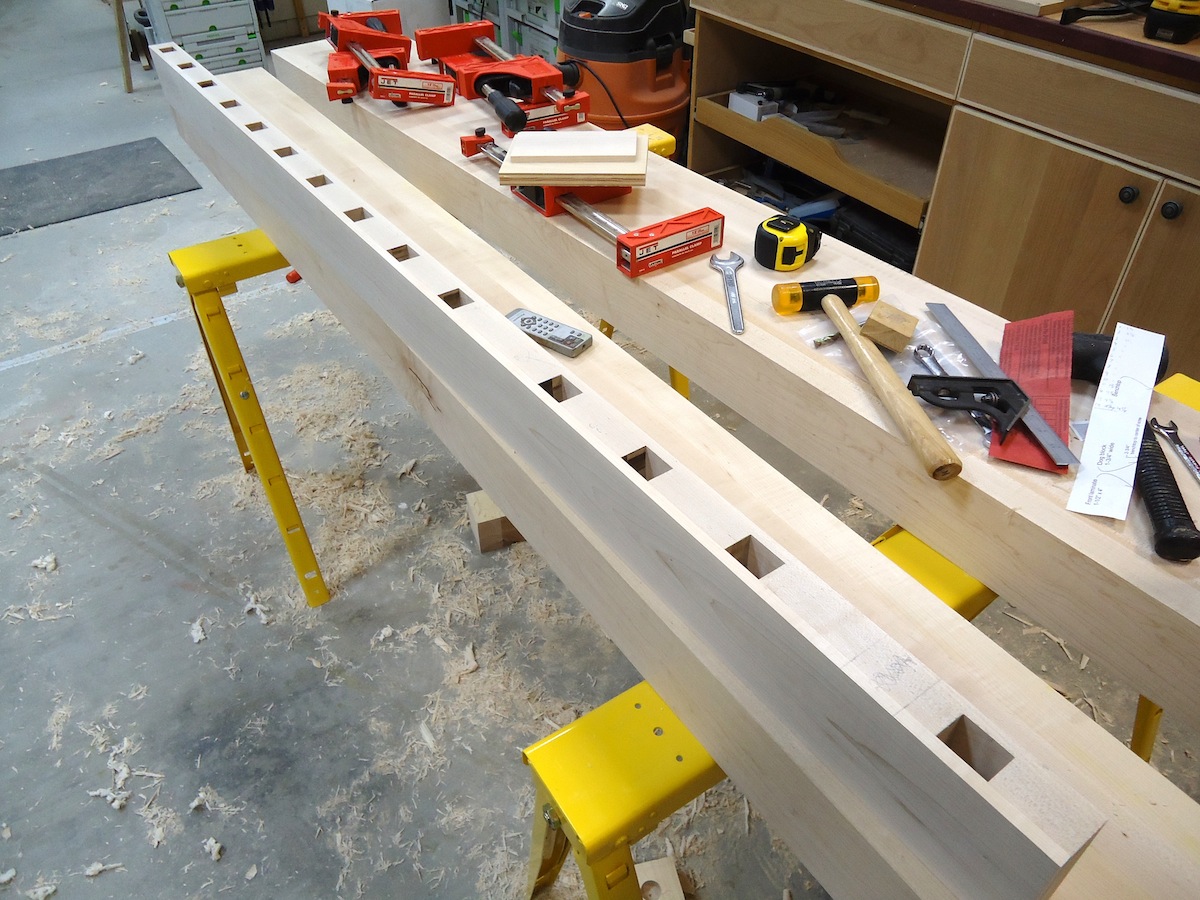
“The Dog Strip”…..sounds like it should be a street in Las Vegas. Just me? OK, focus Marc! The dog hole strip is made with the aid of a routing template and a pattern bit. The dog hole itself is positioned at a 2 degree angle to offset the force that will be applied to the dogs when in use. The dog holes also feature a small “shelf” that essentially serves as a depth stop so the dogs don’t go too deep into the bench.
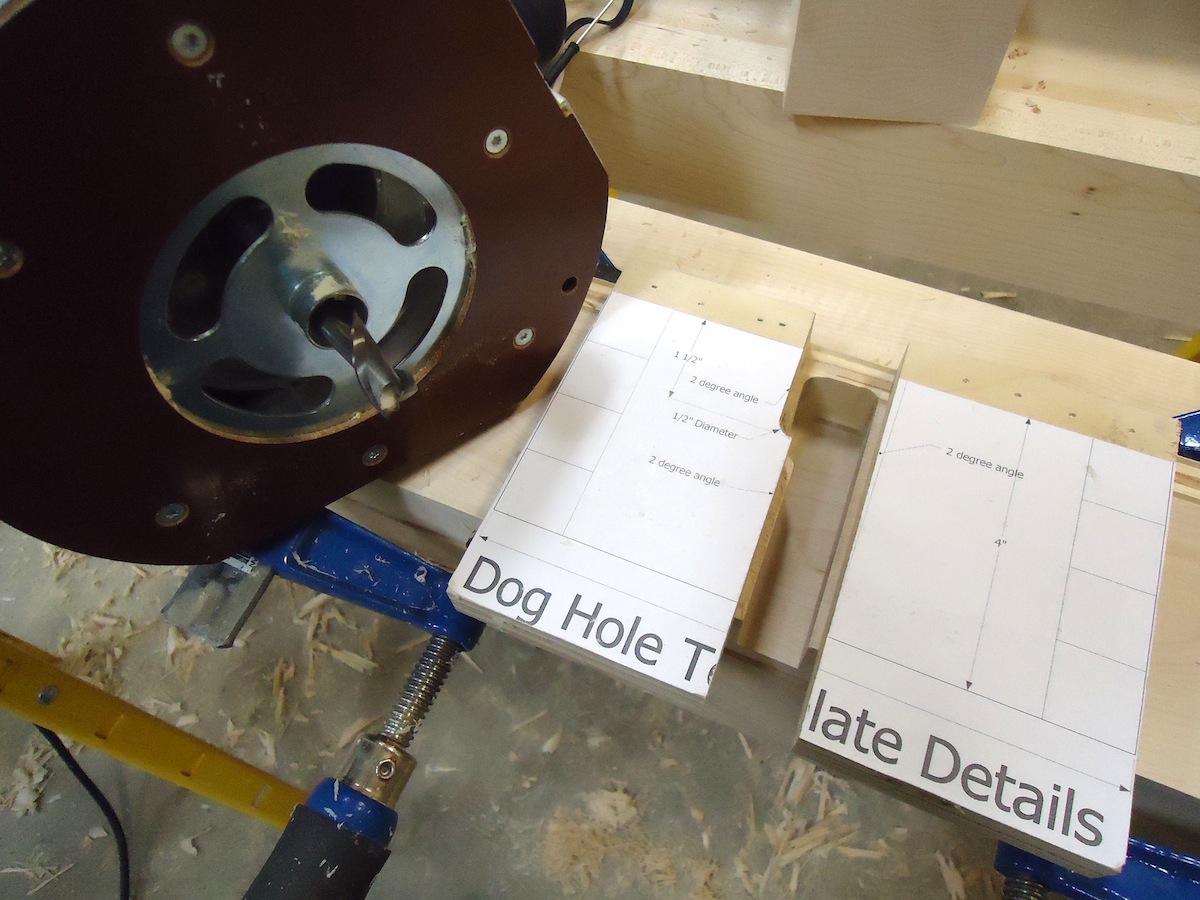
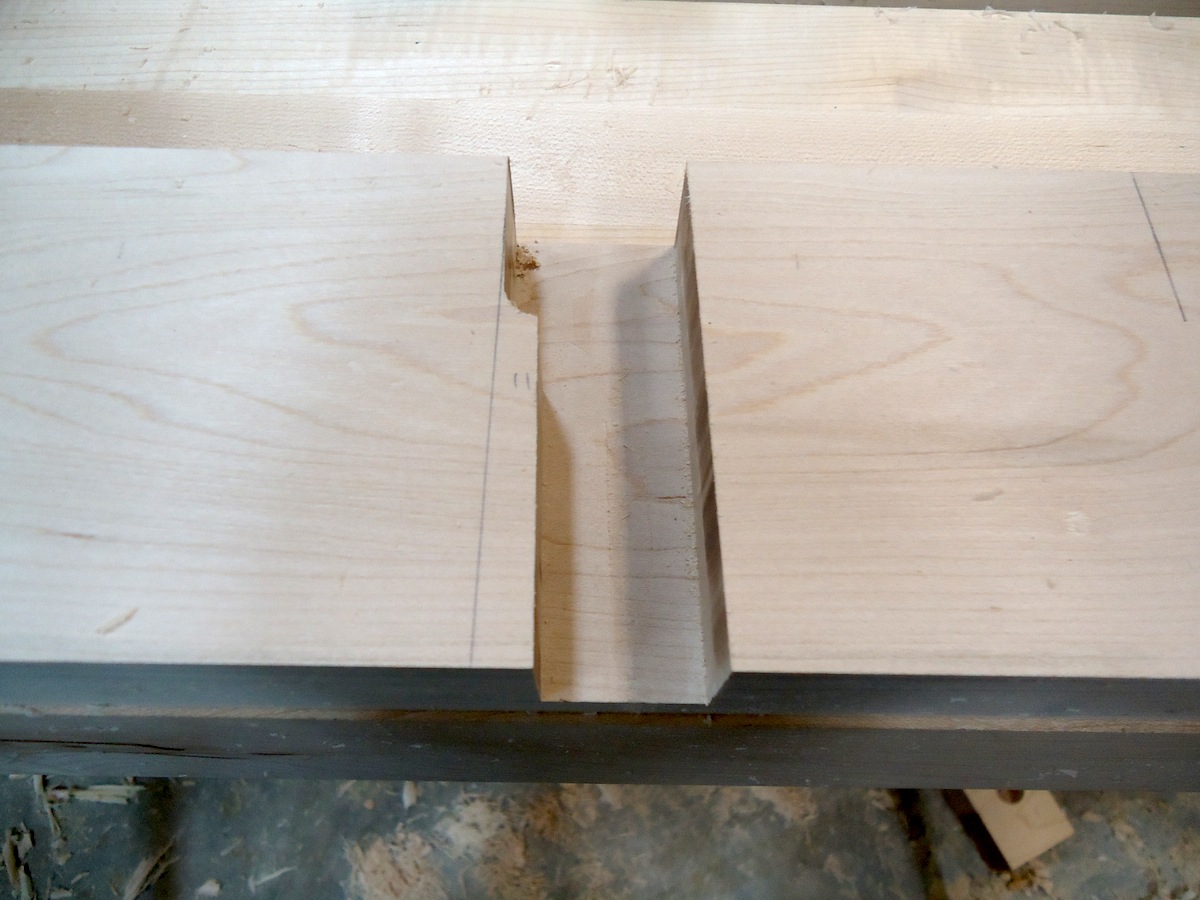
After routing, a strip of 3/8″ thick maple caps it off. The end result is a perfectly-centered series of dog holes that are now ready to be glued to the bench top. Notice that the dog hole strip does not run the full length of the bench. This is so that the tail vise can do its job and the movable dog block will have some room to travel. The strip is glued to the bench with the aid of Dominos for alignment.

Front Laminate & Dovetails (Condor Tails)
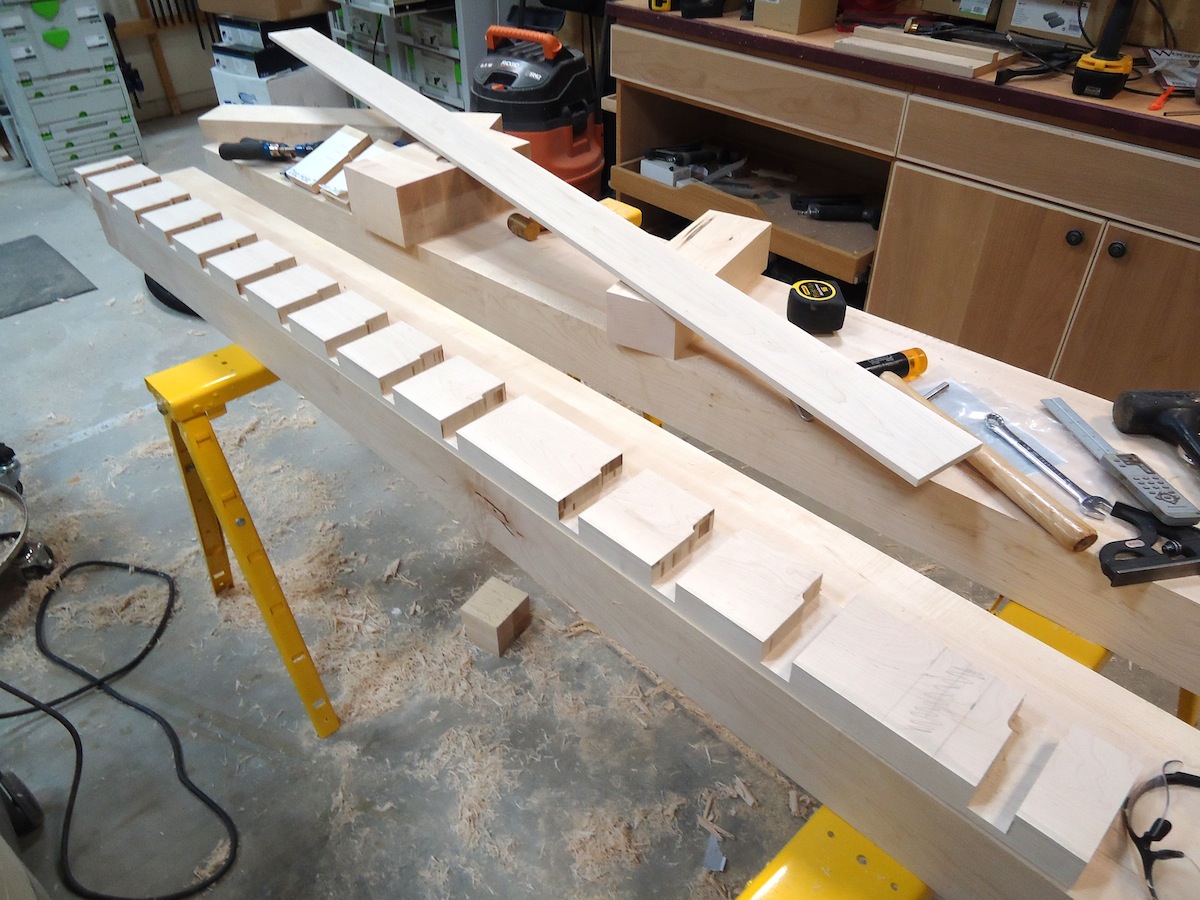
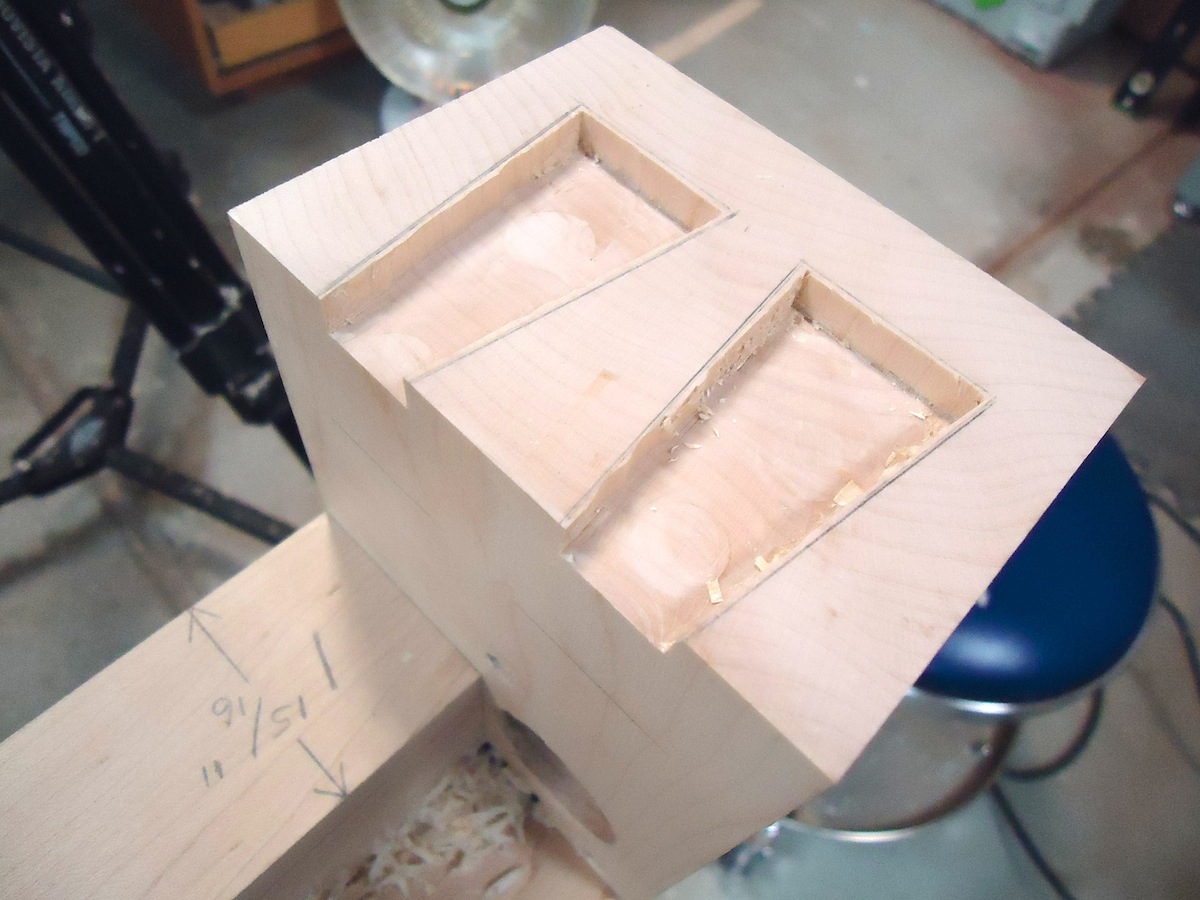
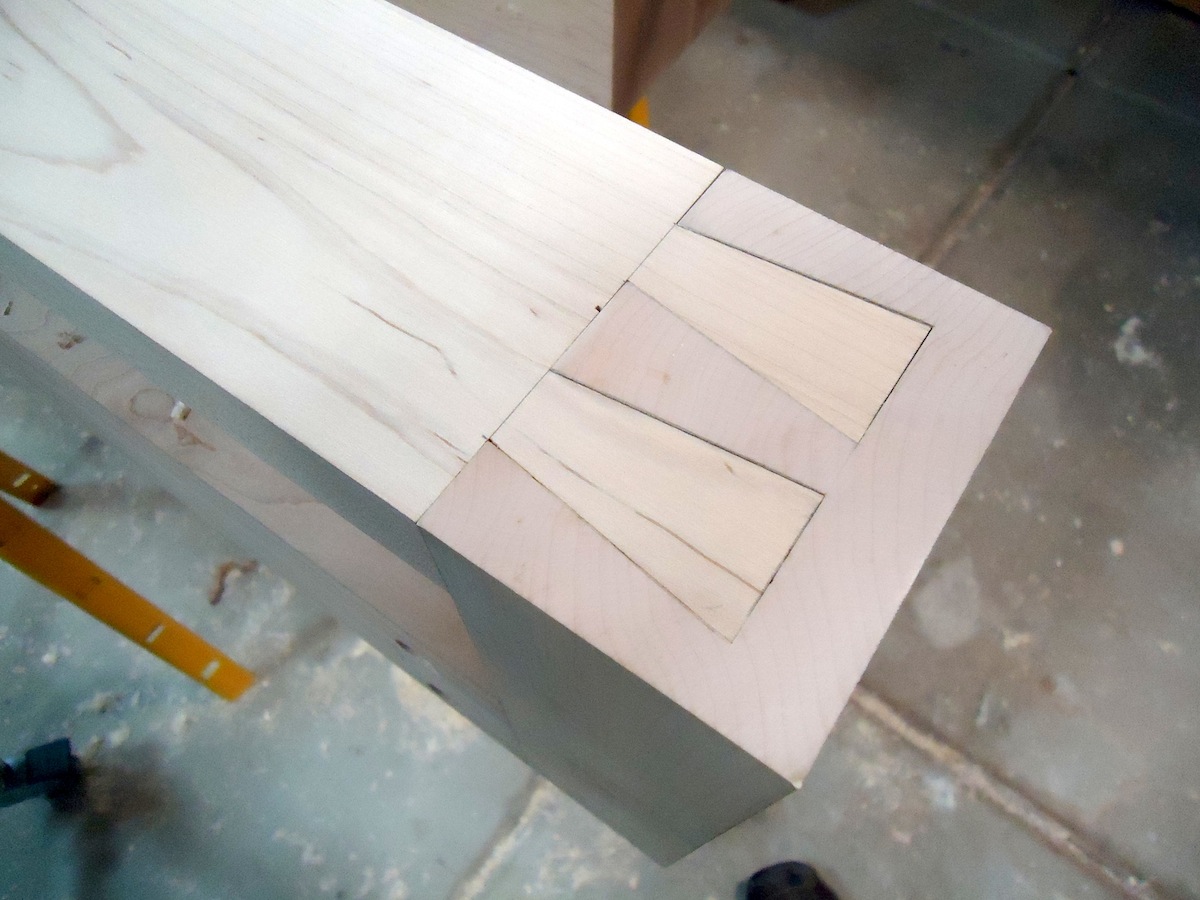
The bench top is finished off by attaching the front laminate strip. The only tricky part about this is the fact that we need to tie the strip into the end cap. There are several options for how to accomplish this, including something as simple as a butt joint and lag bolts. But that’s no fun! So I decided to aim for the fences and make the connection with dovetails. 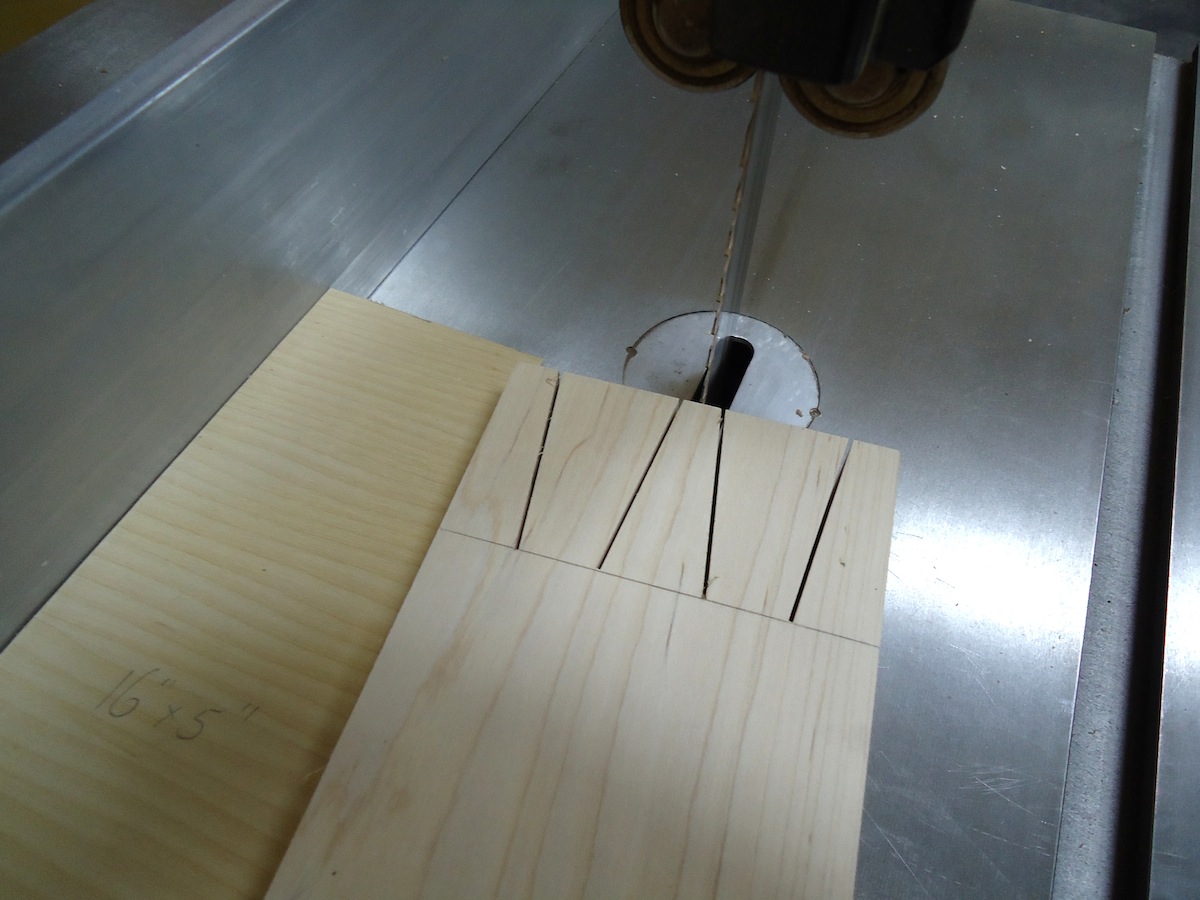 I followed Jameel Abraham’s method, published in an article called “Condor Tails” in Popular Woodworking Magazine (August 2011). The method is right up my alley as it makes good use of both hand and power tools. The tails are cut first at the bandsaw. The pins are then cut into the end cap using a clever combination of chisels and a pattern bit in the router. You’ll have to buy the back issue or join the Guild to get the details on this method. The picture below shows the dovetails in the “rough state” with pencil marks and all. After it was glued into place and cleaned up, I was truly impressed with the results. A near piston fit! Kudos to Jameel on coming up with this method for what would normally be a pretty daunting joint.

Finishing Up The Tail Vise
 With the front laminate glued into place, we can now route the grooves for the tail vise rails. The rails are then screwed into place and the dog block slides cleanly in the rails. It is interesting to note that the metal nut block shouldn’t make contact with any wood. If everything is working properly, it should slide back and forth making contact with the metal rails only.
 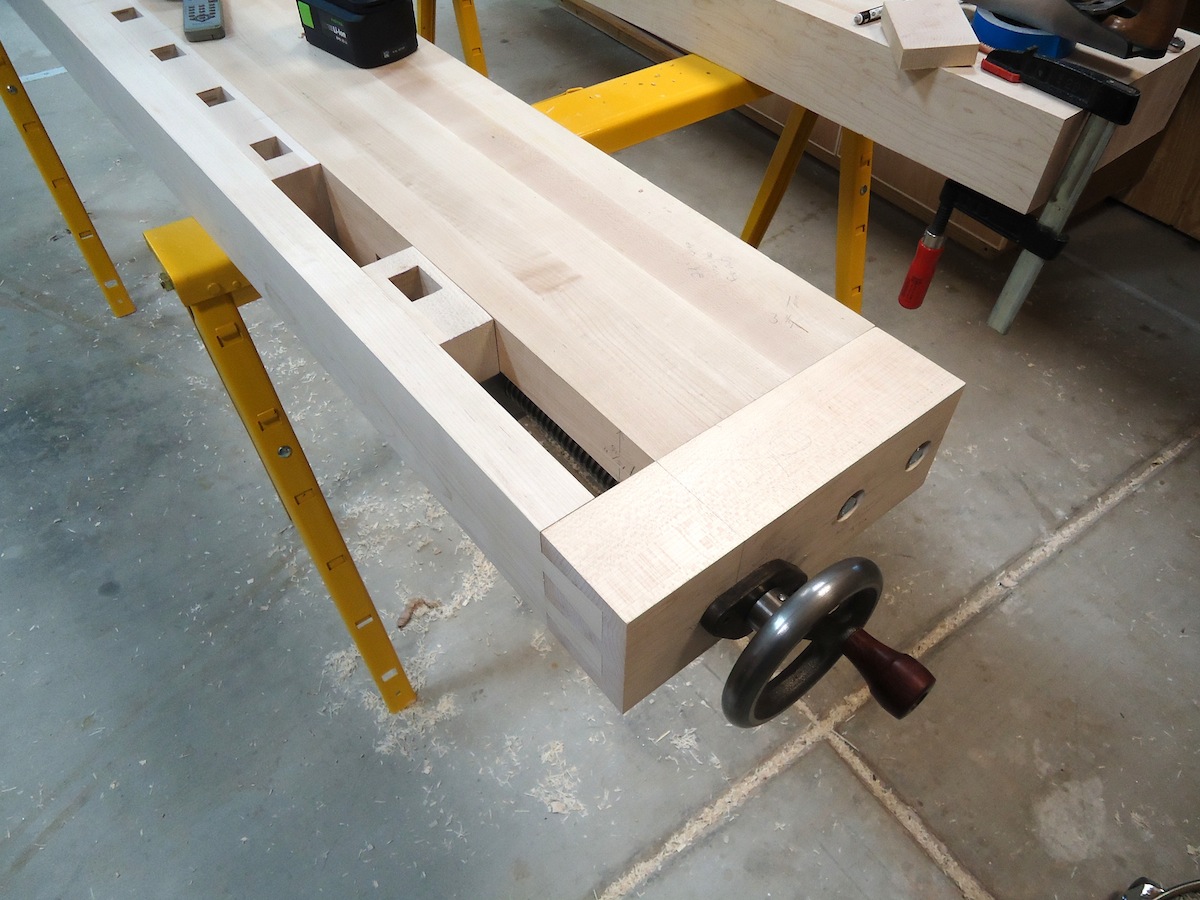 I didn’t mention it earlier, but when making the dog hole strip I was careful to include one extra dog hole. That one was reserved specifically for the movable dog block, which is installed here in the final step. The vise has incredibly smooth action and travels quickly. I think I’m going to like this!
The Dog Breeder
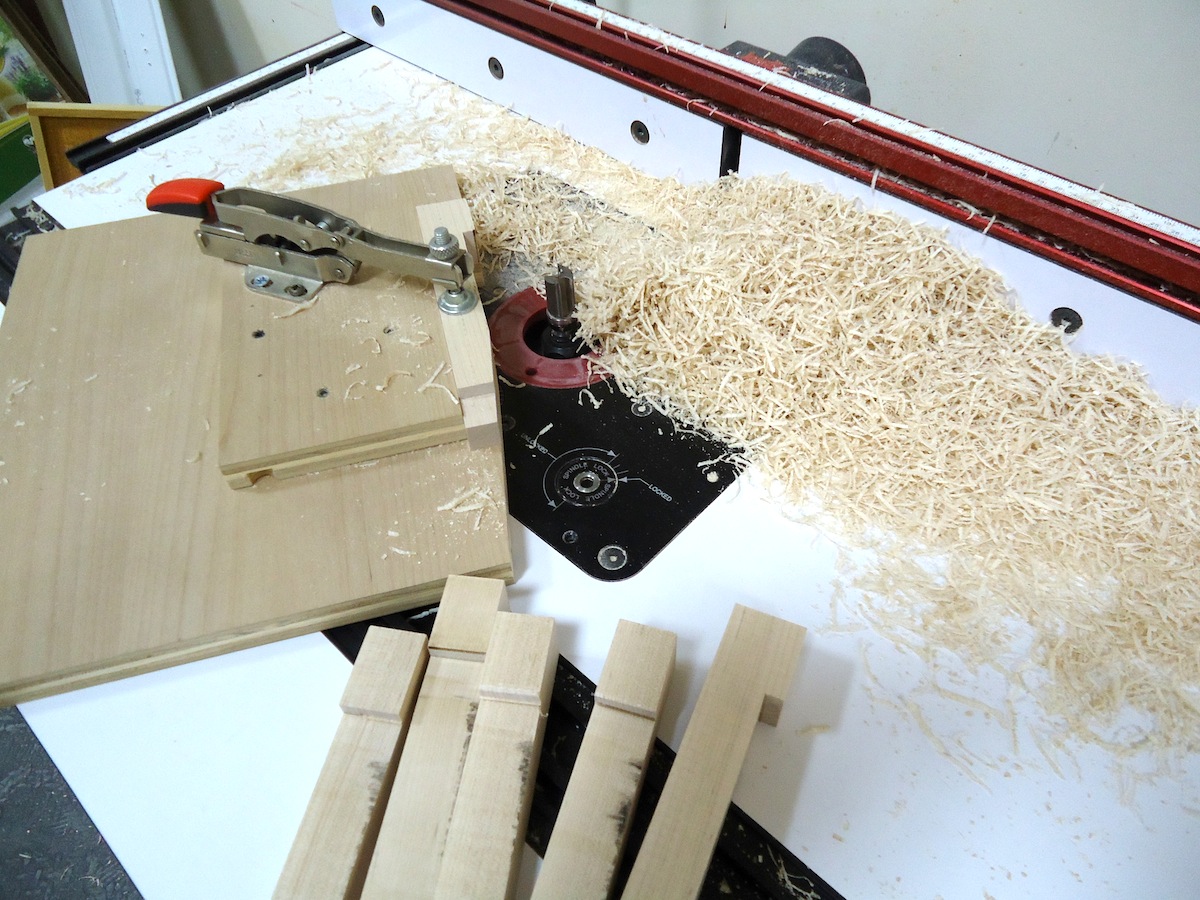
The only thing missing from my new bench top is the dogs themselves. They are fairly easy to make but it can be time-consuming. So I figured I would save some time by making a makeshift routing jig that I affectionately refer to as “The Dog Breeder”. Once the shape is cut, each dog receives a piece of 1/8″ stock that serves as a spring. A little fine-tuning with my smoothing plane and the dogs slide in and out of the dog holes with ease. When full retracted, you can see they sit just below the surface of the bench.


Wanna build along? Sign up for the Wood Whisperer Guild today!