6 Days to Aurora – Day 5

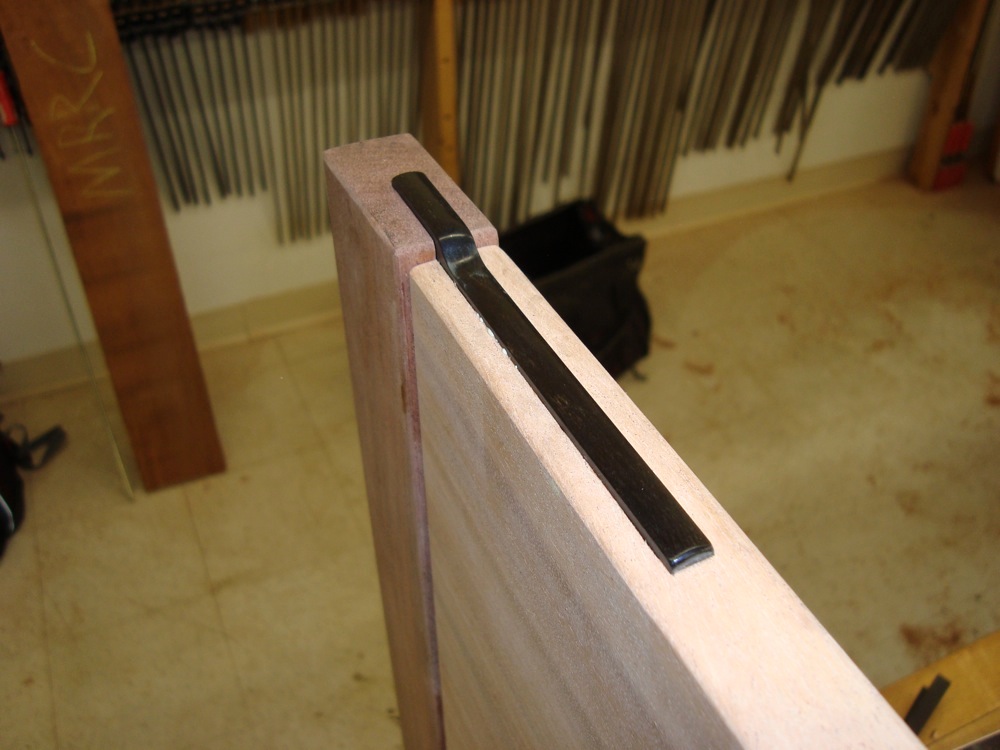
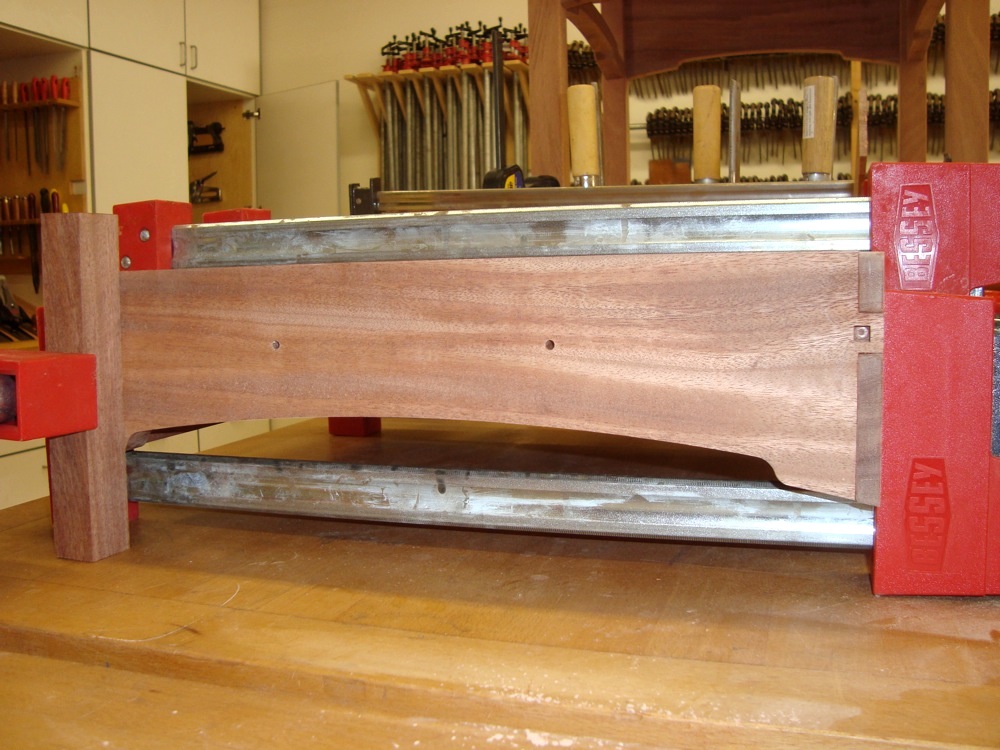
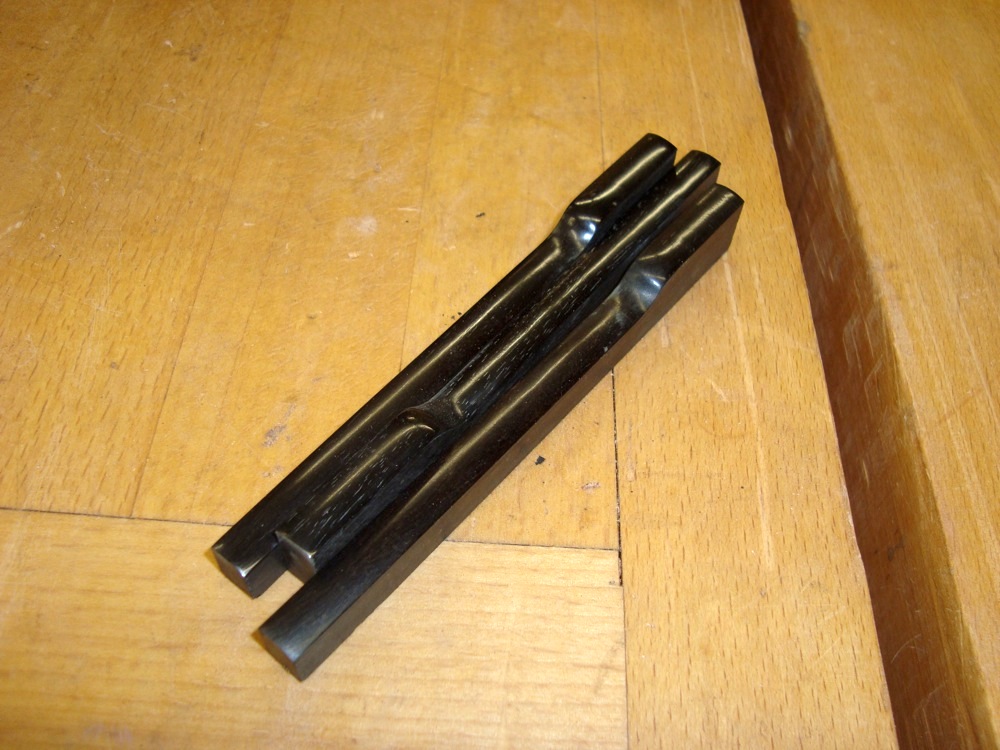
day5-1 Today was a day of tying up loose ends, which means the black dust was flying! I started by popping in a bunch of the ebony pegs. Then I used this very handy jig for pillowing the ebony inlay on the breadboard ends. The big ebony inlay, if glued all the way across could negate the movement allowed by the breadboard ends. So its important to only glue the right side of the inlay, so the left side can float with the breadboard.

day5-2 day5-3 day5-5 day5-6

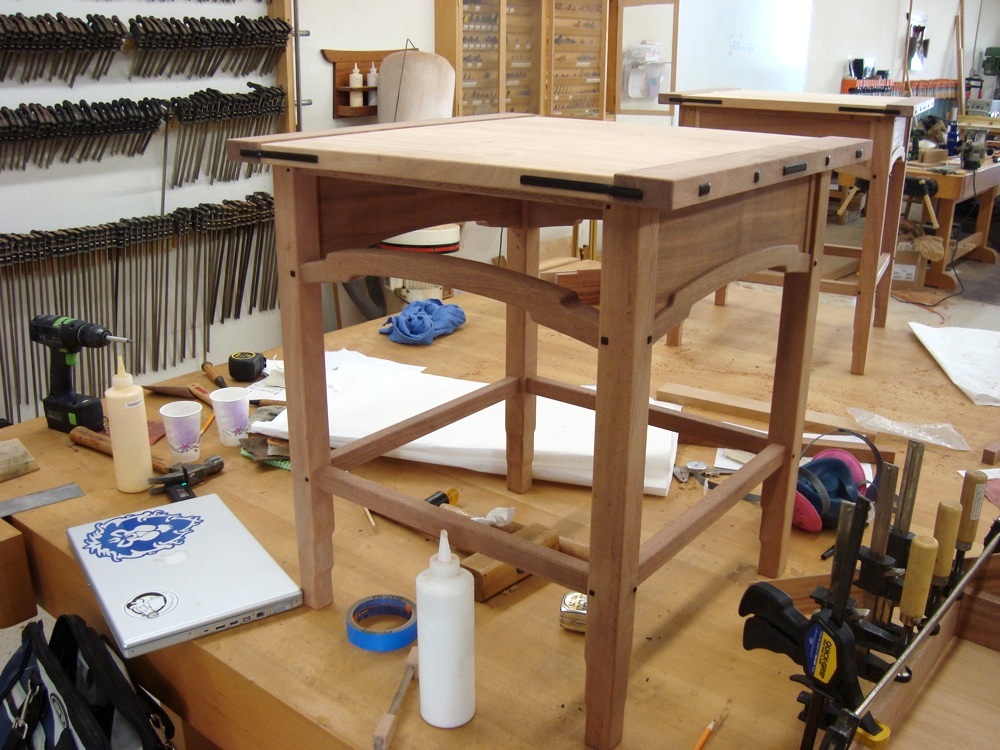
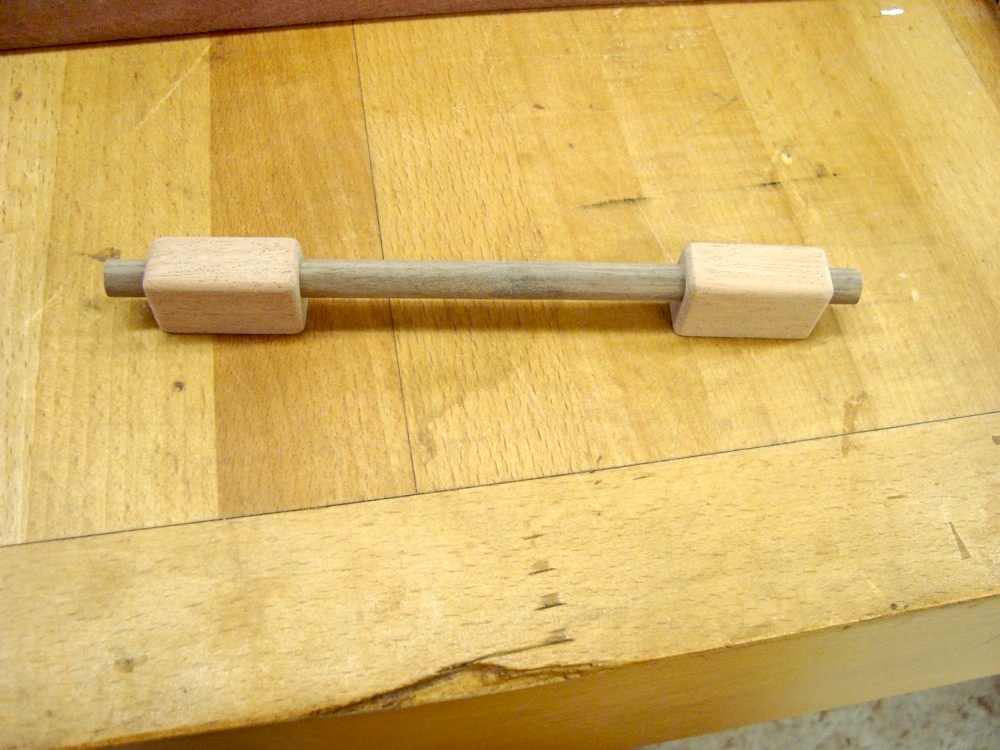
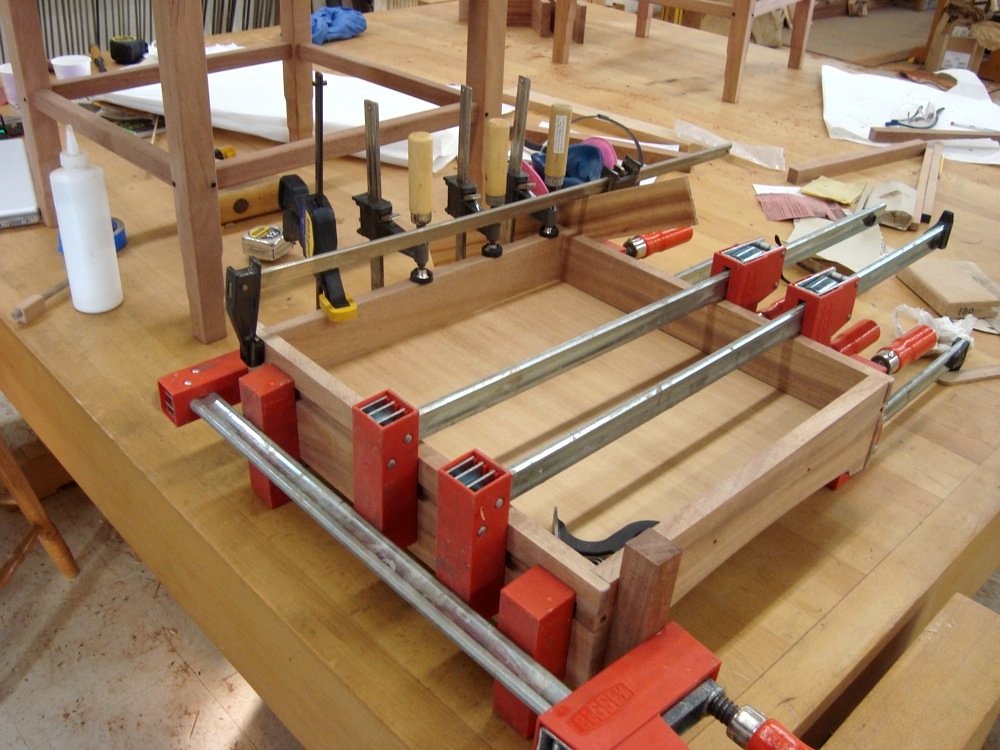
Below you can see the handle for the drawer. Pretty simple really: just two mahogany blocks with a dowel running through them. You can also see the final glueup of the drawer. If you look closely at the drawer front, you’ll see how the downward curve continues through the drawer sides as well. A simple beveled rip at the table saw creates this nifty detail. Before I left for the evening, I put the top on the base and got a good glimpse of what this table is going to look like. I’m a happy woodworker!
day5-8 day5-9 day5-10 day5-11

The rest of this series:
6 Days to Aurora- Day 1
6 Days to Aurora- Day 2
6 Days to Aurora- Day 3
6 Days to Aurora- Day 4
6 Days to Aurora- Day 5
6 Days to Aurora- Day 6

Category: Shop Journal

Comments

  1. Germain March 14, 2009

    Gee Marc. You’re making it look so easy. Do difficult would it be for the average hobbiest to make such a table?

    •  

      Well, that depends. Difficulty level is pretty high if the person is starting from scratch with no guidance. In a class setting, with Darrell right there, a beginner would find this project very challenging, but certainly possible. I do feel that if someone were to try tackling a project like this too early in their woodworking career, they might be put off by the number of jigs and the level of accuracy required to get the job done properly.

      • Germain March 15, 2009

        Good info, Marc. Thanks for an honest assesment about the level of difficulty with that G&G table.

        Seems my question about visiting The Gamble House was prophetic. :-)

  2. Sunshine Gerl March 15, 2009

    I always wondered how those breadboard inlays went into the wood…now I know thanks to you!!!

    Wow…what a beauty you guys have made. I can’t wait to see the final piece!!!

    SSG

  3. Mark March 22, 2009

    Marc,

    I’m curious what you used for drawer runners in the table. I didn’t see any pictures with a wooden frame for the drawer to slide on. Did you use a mechanical runner?

Leave a reply

XHTML: You can use these tags: <a href="" title=""> <abbr title=""> <acronym title=""> <b> <blockquote cite=""> <cite> <code> <del datetime=""> <em> <i> <q cite=""> <strike> <strong>

Coming Up


  • There are no upcoming events

  • Video: Flattening a Benchtop With a Router

    May 23, 2012
  • Adirondack Chair Class (William Ng School)

    June 4, 2012
  • Video: Turning a Tool Handle

    June 6, 2012
  • Woodworking in America (Pasadena)

    October 12, 2012

Live Shop Cams


Enter the live room →

Pressure Treated Wood Utility Poles for building structures, distribution or transmission.

Cliq Studios sell quality Kitchen Cabinets in a range of woods including cherry, oak and maple.


what wa