Jeff’s Oldtime Fretless Banjo
Viewer Project
-
By Jeff Delfield from Bryson City, NC
Added on July 23, 2012
I am a recreational luthier who specializes in oldtime banjos (a predecessor of the now more common bluegrass banjo). I’m relatively new to luthiery and wood working, and I stumbled upon The Wood Whisperer website a couple years ago. I’ve really enjoyed learning from Marc and really appreciate everything that he (and so many other woodworkers) do for us enthusiasts. One of my more recent builds turned out so well that I thought I’d share it with all of you. It is a Fretless Oldtime Banjo with an Internal Resonator.
The Pot
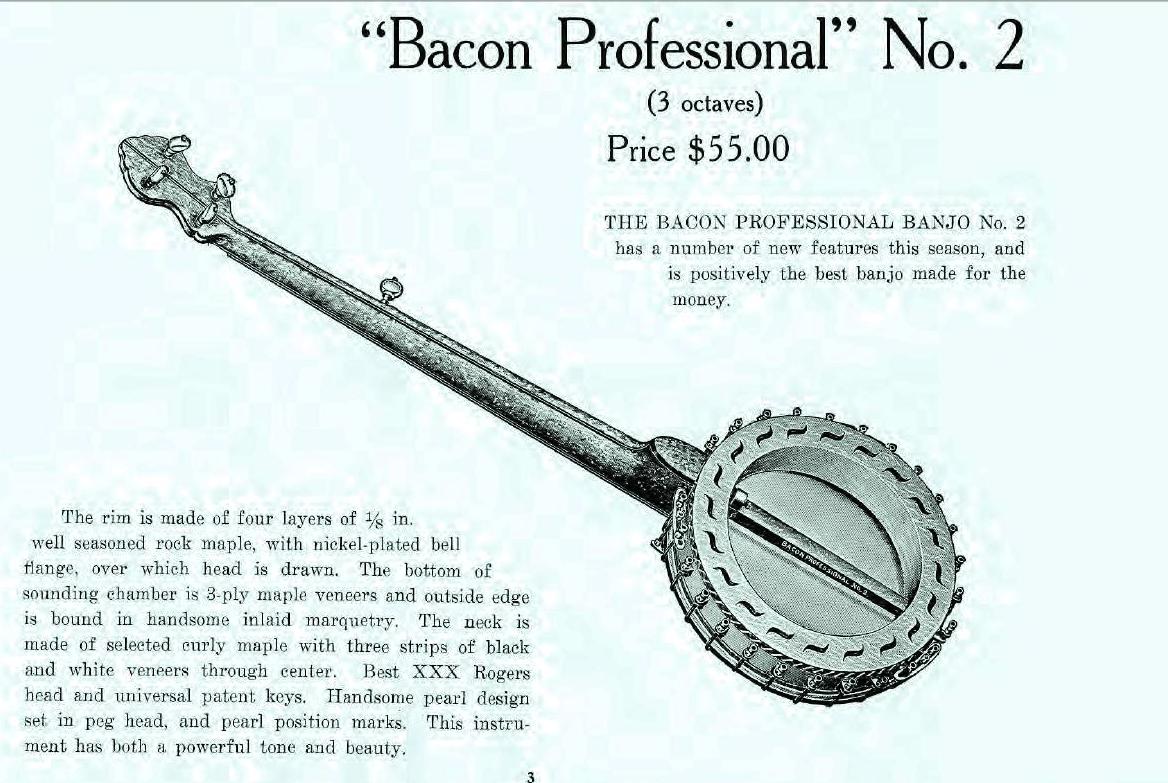
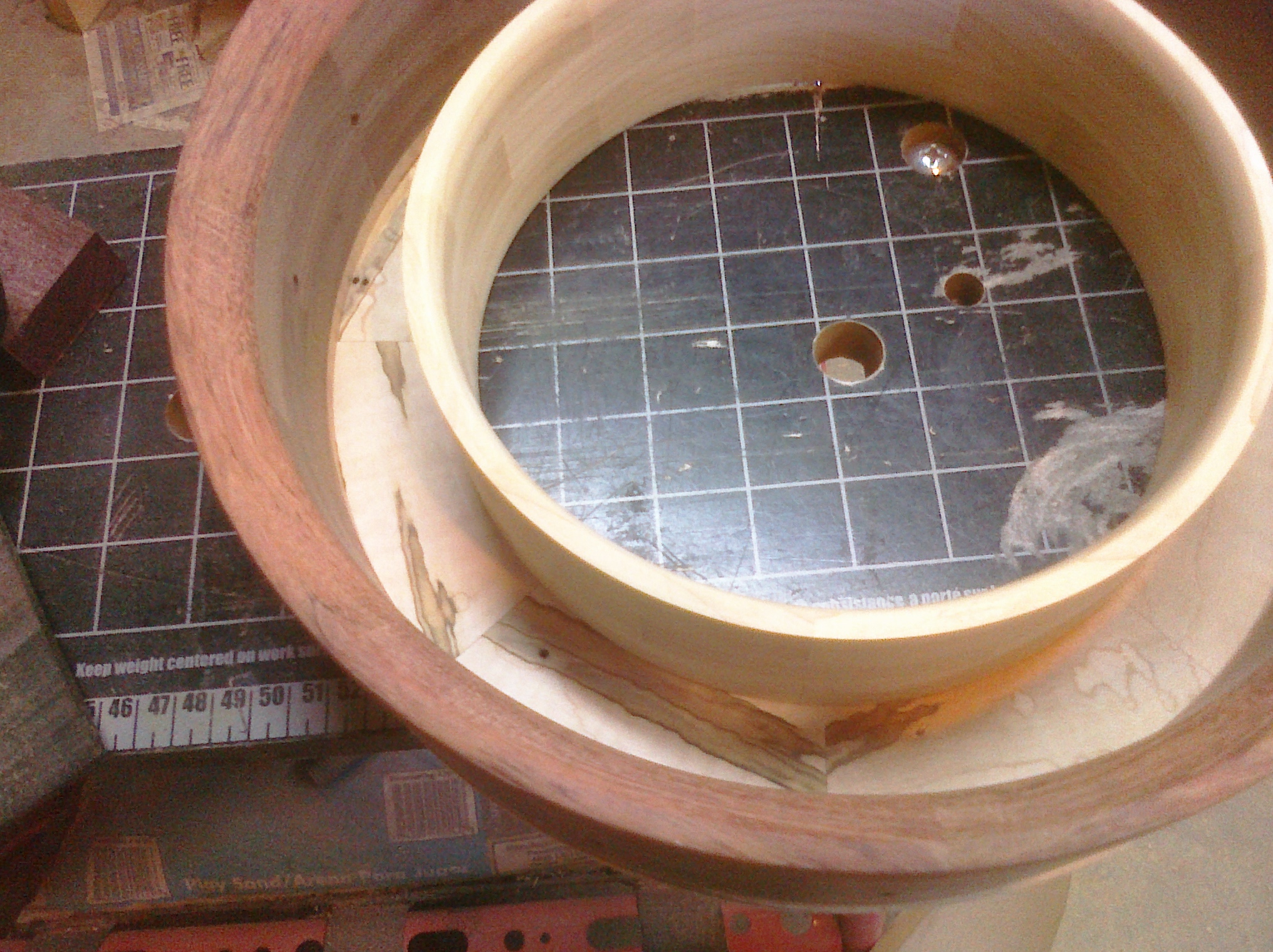
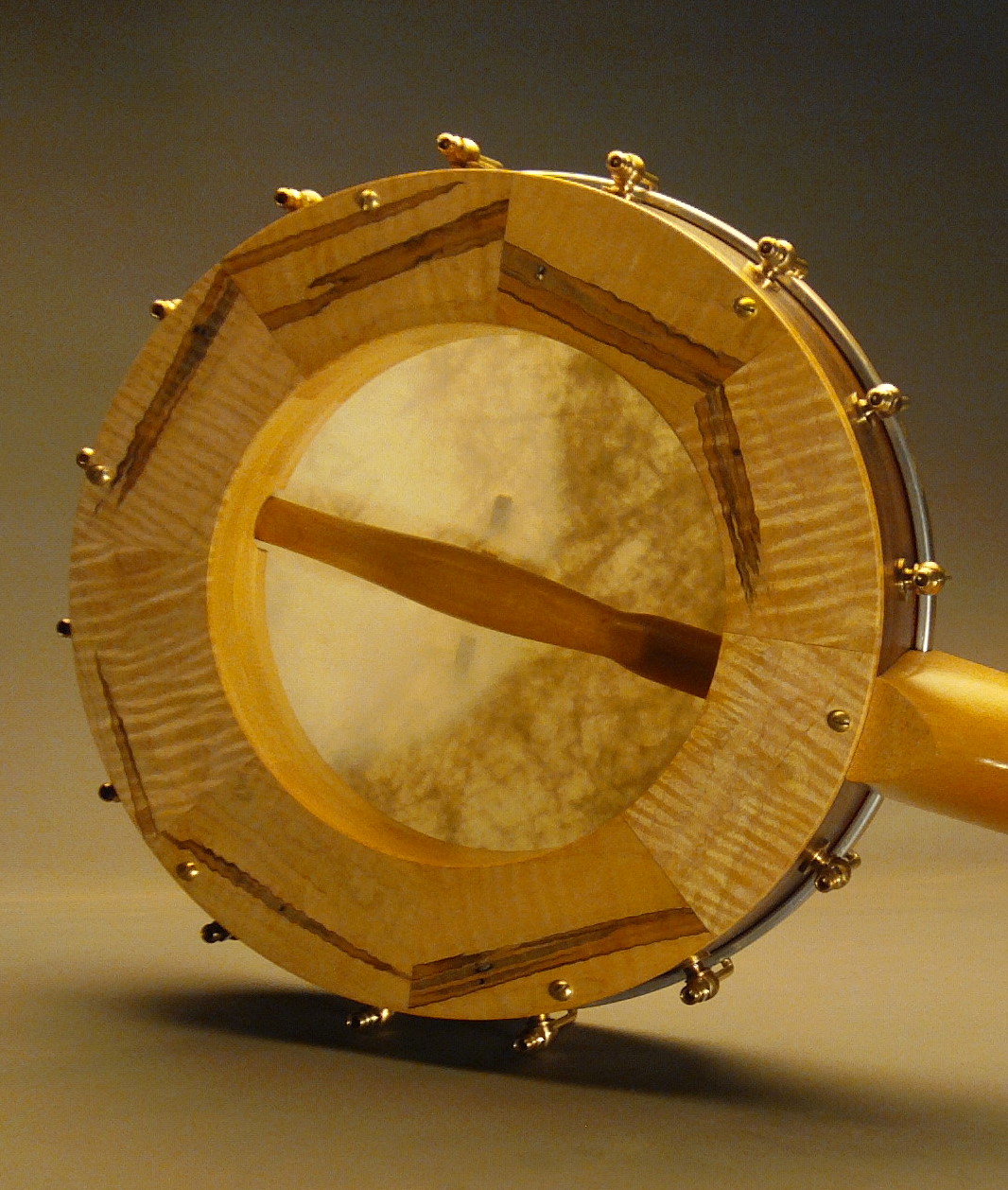
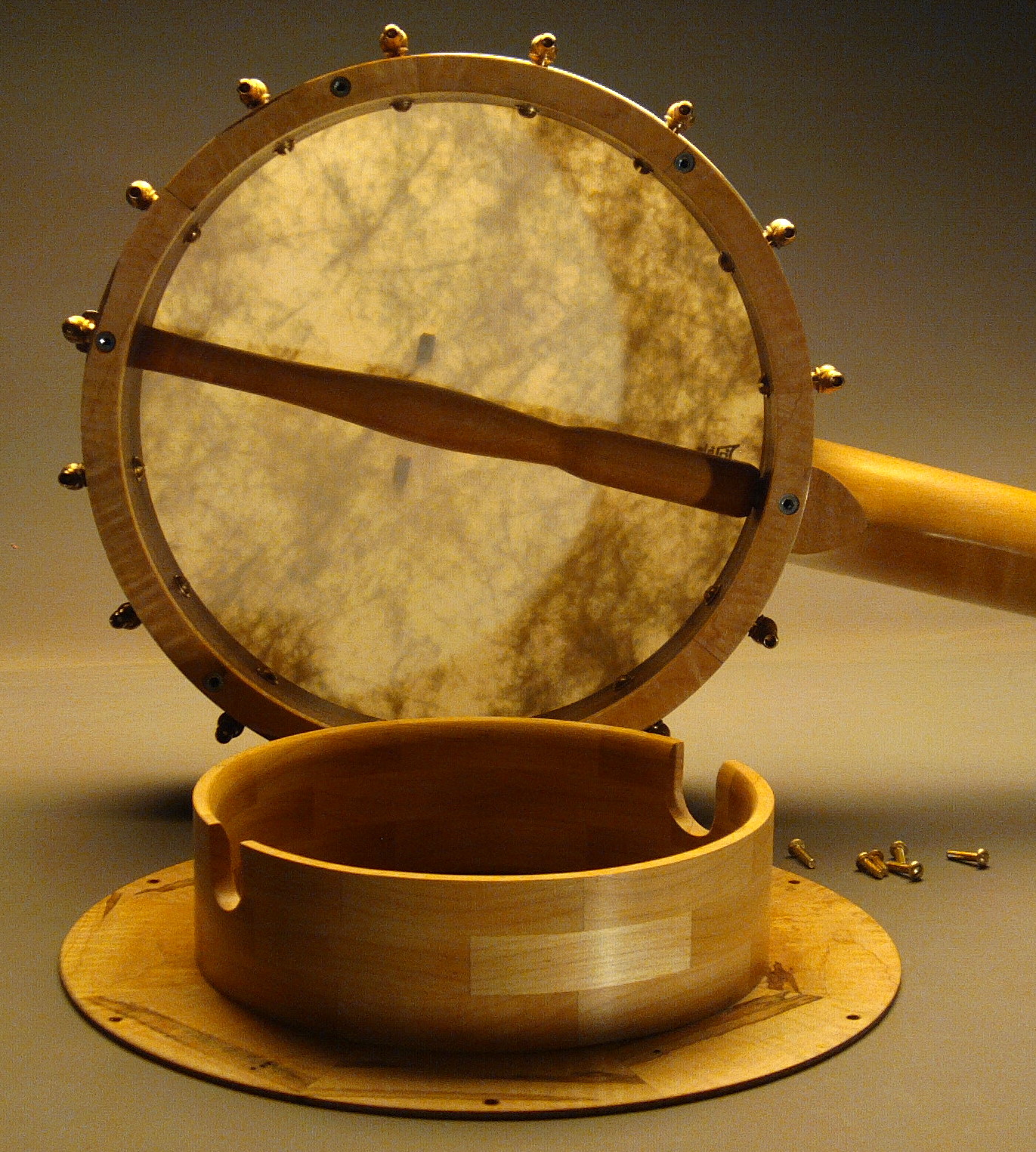
The inspiration for the banjo pot (the rim assembly) came from the Bacon Banjo Company, which developed the internal resonator in the 1910s. The pot is designed with two rims (one is 12″, with a 3 1/4″ depth and the other is 8″ with a 2 1/2″ depth) and a 2″ back to create a hollow sound chamber. While the internal resonator gives the banjo added volume, its main function is to balance the tone of the banjo – the bass notes definitely pop on this instrument.
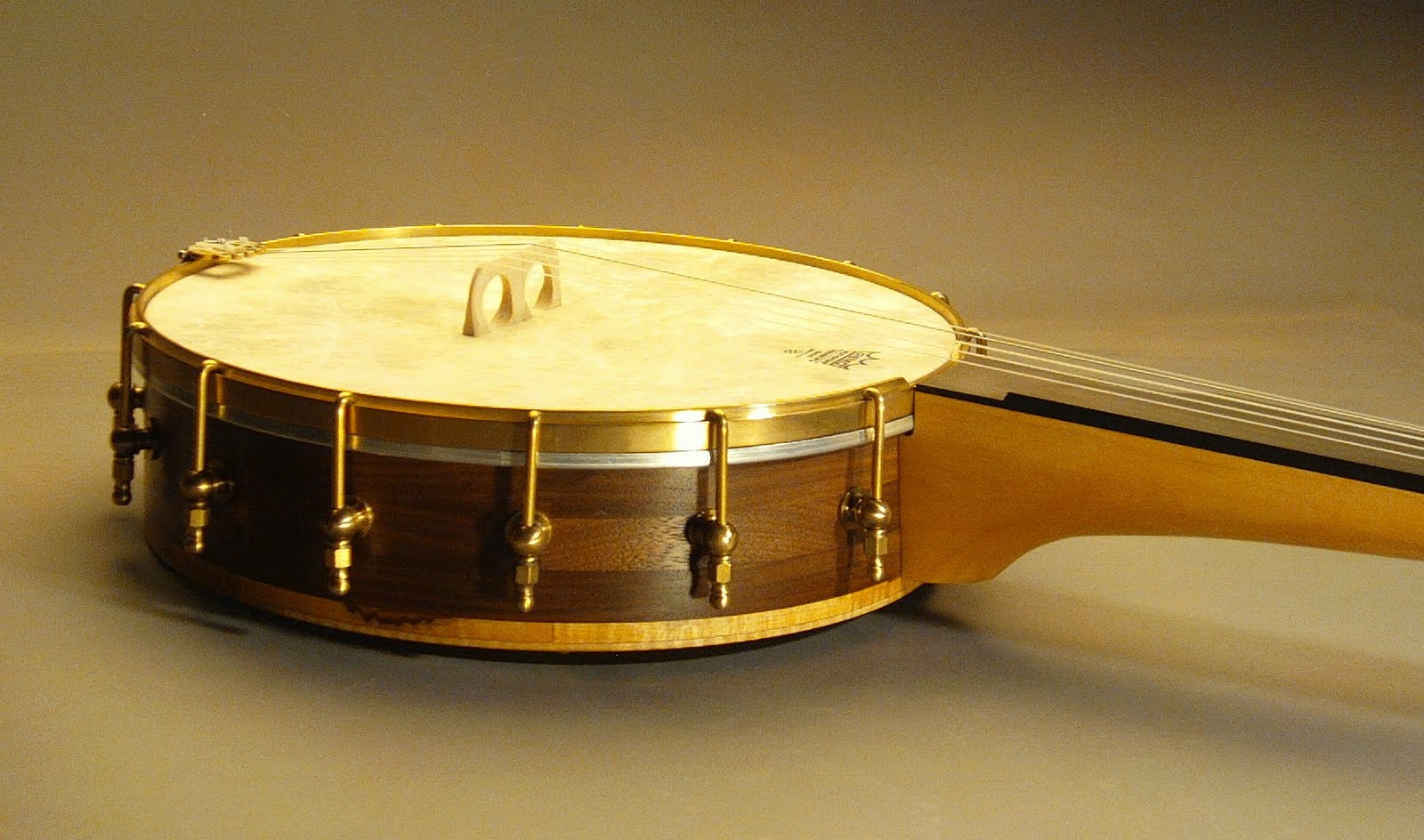
Materials used to build the pot were: exterior rim – walnut with a cap of wormy maple; interior rim – maple; and sound chamber back – curly wormy maple. I added some wood insert nuts to the bottom of the rim so the internal resonator could be easily removed with 6 brass screws, giving the banjo player a choice of having the resonator on or off.
The Neck
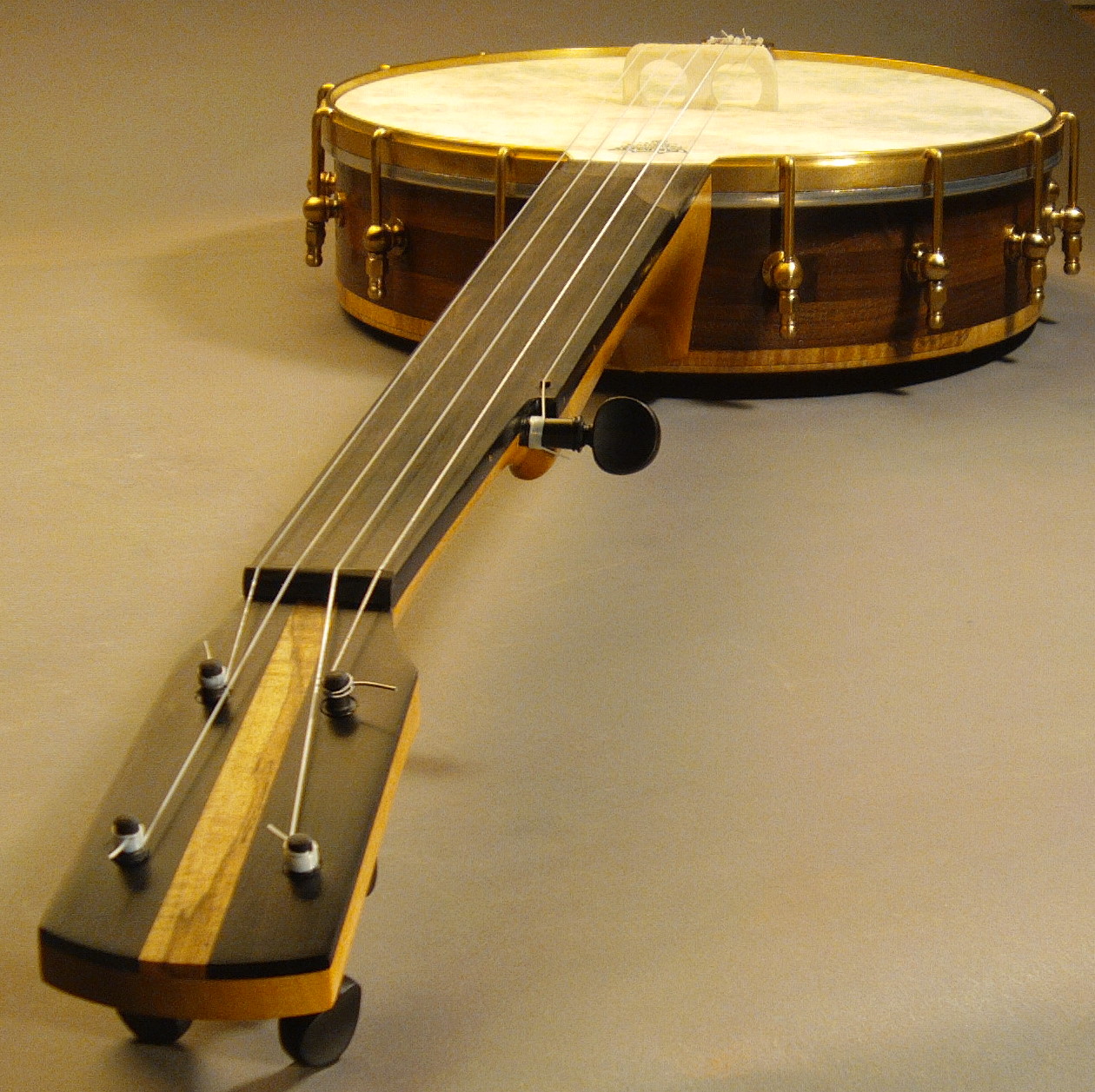
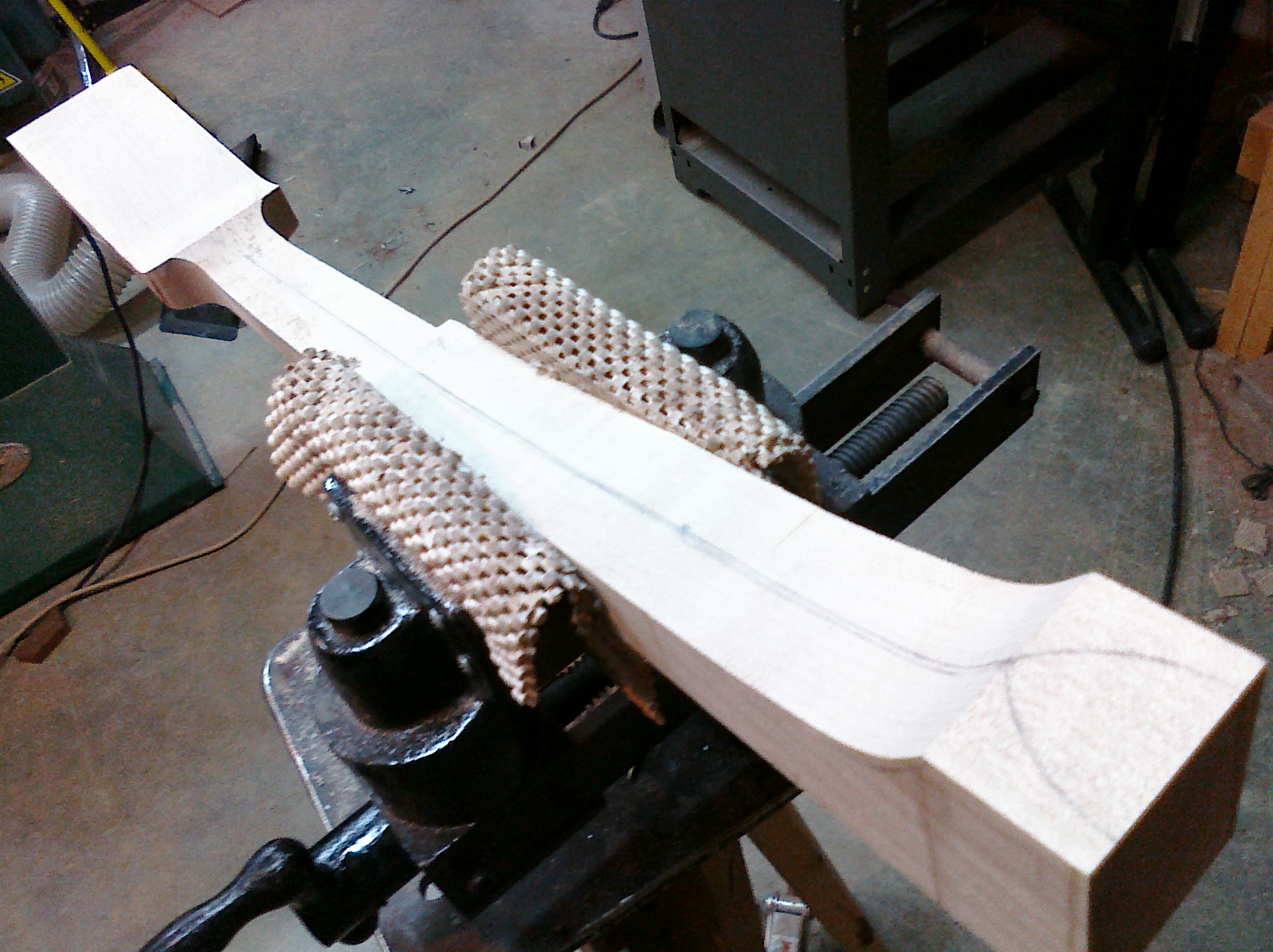
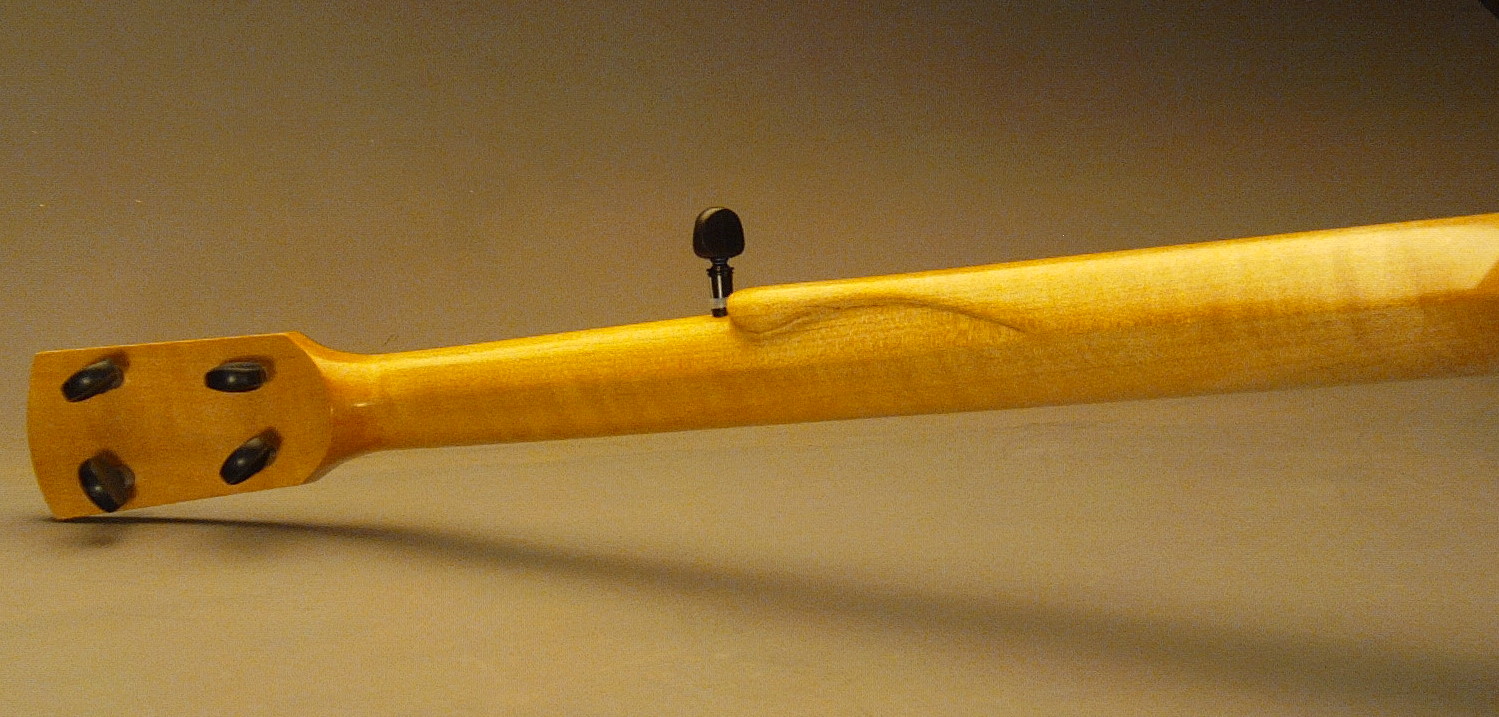
The neck of the banjo is in no way a Bacon replica–in fact, it references the fat beefy necks on banjos of the Civil War era. It was made of hard maple and has a simple carving where the fifth string picks up. The fretless fingerboard is ebony and the peghead veneer overlay is ebony with a strip of wormy maple down the middle.
Appointments
The tuners, though look like friction fiddle tuners, are actually mechanical tuners call Pegheds. All the raw brass hardware came from Bill Rickard in Canada. The strings are a special nylon called Nylguts, which come the closest in sounding like the gut strings used on oldtime banjos, except no animals were injured.
For the finish I hand rubbed 9 coats of shellac. Enjoy! And thanks again Marc.
Advertisers