I’ll be the first to admit it: my turning skills are weak. Every time I visit my friend/mentor David Marks (an amazing turner), he reminds me that I could use his help. That’s about the point that I find myself heading into his wood shed to admire his extensive collection.
It’s not that I don’t like turning. I find it quite relaxing. I just never seem to find the time or motivation to really dig into it. I have so many things I want to accomplish outside of turning that the lathe always seems to take a backseat.
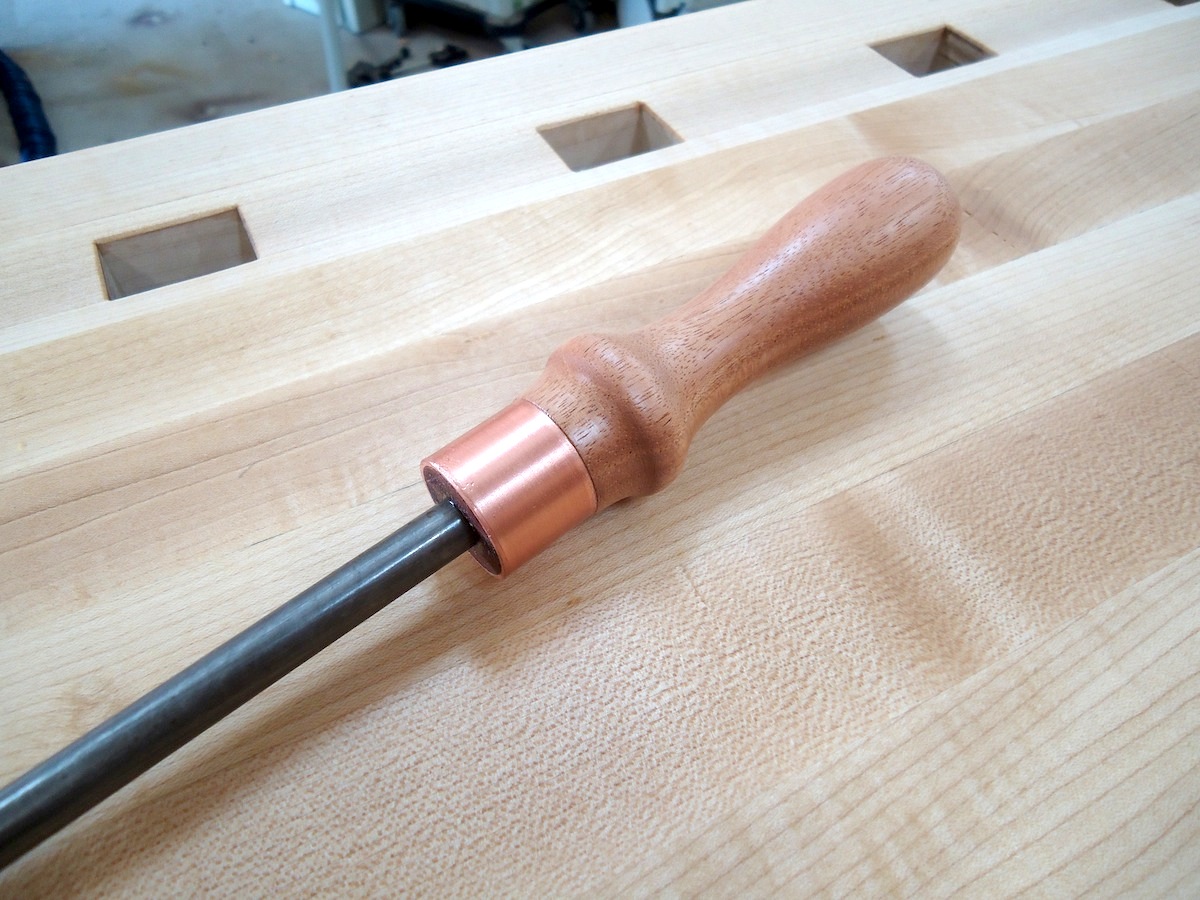 Now all that said, I still think every woodworker should own a lathe and know how to use it. I may not be making beautiful bowls and elaborate vessels, but I can certainly turn just about any furniture part I need. I can also try something like making a tool handle for the first time. So that’s what this video is all about. It’s a quick look at the process I used to create a tool handle for my workbench’s leg vise pin. Guild members have already seen this footage as it is another excerpt from the Roubo Guild Build.
Think of all the things in your shop that have wooden handles. What happens if they break? How nice would it be to have a nice custom-designed replacement ready to go in minutes?
The process begins with a small block of wood. I find the center-point and drill the appropriate diameter hole to the desired depth. This part of the process will vary depending on what you are making a handle for. In my cases, a simple 3/8″ hole is all I needed.
To mount the blank, I tap a spur chuck into the other end and insert the assembly into the lathe. The live center is then inserted into the 3/8″ hole and snugged up. Applying too much pressure here could split the blank so be cautious when you do this. I then bring the blank into round with the roughing gouge.
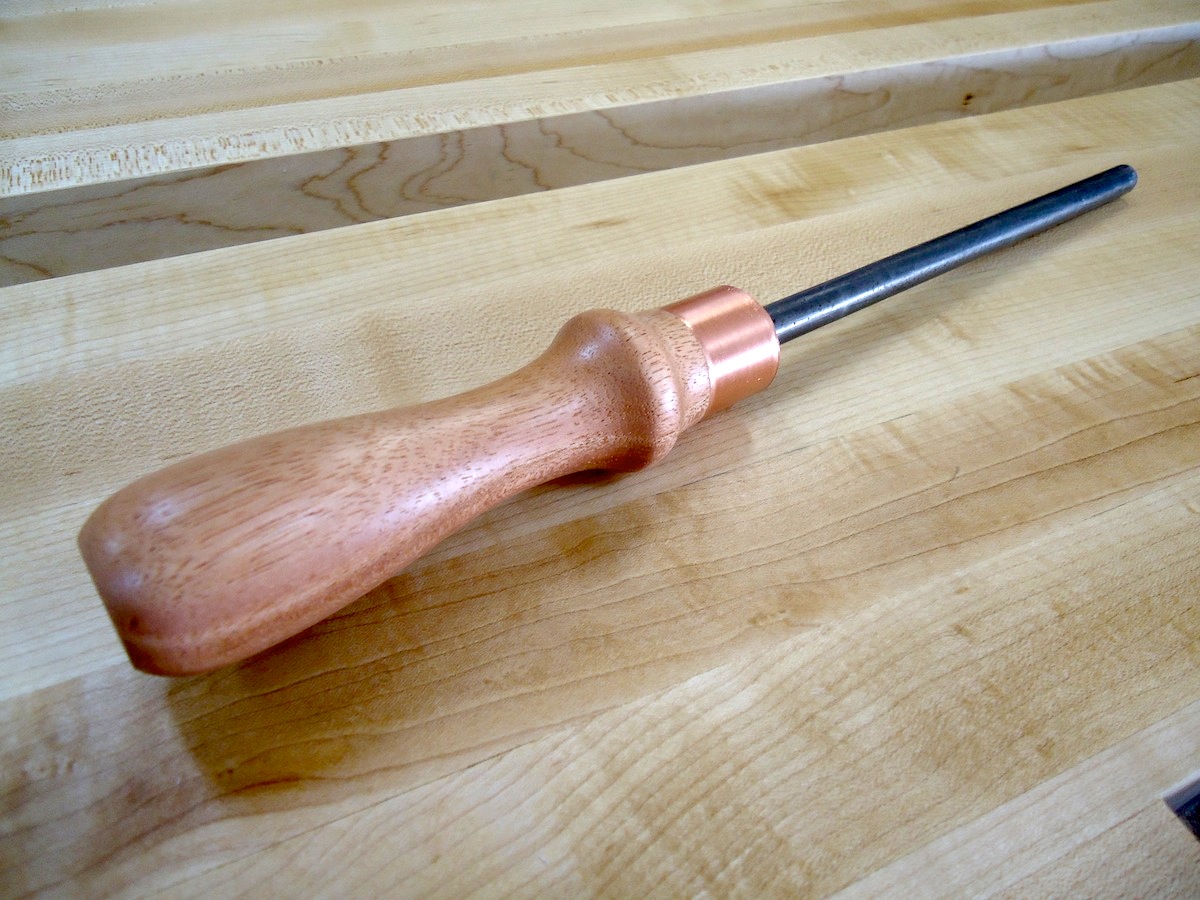 In order to maintain the integrity of the tool, it’s a good idea to add a ferrule to the end. The ferrule holds the wood together so that the tool doesn’t break apart the handle during use. Not so much of an issue with a leg vise guide pin, but certainly a consideration for just about any other tool. I use a copper coupling from the hardware store, cut in half, as my ferrule. There are lots of options for something like this so don’t be afraid to get creative.
The ferrule slides over a small round tenon on the end of the handle blank and the ferrule itself gives us the dimensions we need to make it. I use a parting tool to create the tenon. Once the diameter of the tenon matches the inner diameter of the ferrule, it’s time to attach it to the handle blank.
I remove the handle from the lathe and put a little CA glue around the tenon. The ferrule slides in place and a hammer helps seat it firmly into position. The ferrule should “bite” into the shoulder of the tenon for a nice snug fit.
Once the glue is dry, I take the handle back to the lathe and begin giving it the desired shape. There’s a lot of room for creativity here but I just went with something very basic. Remember, the primary goal is a handle that feels comfortable in the hand. It is almost automatic that a handle that feels good, will also look good.
Once the shape is established, I sand the surface smooth and add my finish: General Finishes Wood Turner’s Finish. Or as I like to call it, “WTF?!?!” The finish goes on easy and dries quickly. I applied about 5-6 coats in just a few hours! I then cut the handle to release it from the lathe and finished off the cut end. A little sanding and some finish does the trick.
And that’s how I made a tool handle!
Products Used