Ray has a couple of questions about water-based dyes and pinned tenons:
I am building maple morris chairs and I am thinking of using water based dyes from General Finishes. I would like to do the leg outside edges in say a burgundy or ebony and the rest of the chair in light or medium brown. My question is : How much, if any, might the color applied to the edge bleed onto the surrounding surface and if so, do you know of any tricks to remedy?
And this was my reply:
 Hello Ray. Trying to do two different colors can sure be tricky with water-based dye. The water just absorbs so quickly and pulls the dye into the grain, that the color is difficult to control. So even if you tape it off, you will surely get seepage under the tape. So, if you are planning on making a crisp transition, water based dye might not be the best choice. If you plan on doing a bit of a faded transition, you might be able to pull it off.
Now the one way you might be able to get away with this is by spraying. If you tape off your edges, and spray very light misting coats, you could end up with a fairly crisp line. But take your time. As soon as the liquid pools, you are in trouble.
If you do wind up with the color set you are after, you’ll have to seal that color in without disturbing it as well. So very light misting coats of dewaxed shellac would be my choice. then follow up with your topcoat of choice. Hope that helps! Would love to see the results of your work!
Ray then wrote back and asked:
Thanks for the info. Doing further research, I think I am going to cover the entire chair first with water based dye, light mist of 1lb shellac and then gel stain for the offsetting edge color. How does that sound to you? Also, I am using dowel pins on the arms. I have double tenons on the frame. Do you think it is necessary to pin those? I am hoping not, but your advice would be appreciated. (pin the backrest tenons?) I truly appreciate your time and hope all is well.
And my response:
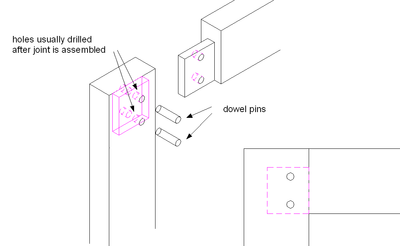 Sounds like you have a great solution there. If you mask off with tape, you should be fine using the gel stain. Just be careful near those taped edges. Now lets talk about pinned tenons. I have repaired more chairs than I care to admit. In many cases, a pinned tenon makes the difference between a chair that simply falls apart, and one that gets loose and needs to be tightened up. If the glue ever fails, you’ll at least have a couple pins stopping someone from falling on their butt. So if you can manage it, I would include the pins as an extra precaution. And just so you know, most of the chairs I repair are commercially-produced to lower standards than you and I would have. They are also chairs that were used and abused in restaurants. So essentially we are talking the worst case scenario here. If the chair is in your home, it will be a much lighter duty piece and you may not find the pins completely necessary, especially on the backrest. Hope that helps.