Interested in my new Hybrid Woodworking book? Sign up and be the first to know when pre-orders are open!

Shop Flooring Choices

First off, I need to say “thank you” to the woodworking community. When I was considering rubber floor tiles for the shop, the outpouring of opinions and suggestions was staggering! Getting advice online is always a crap shoot since we all have different tastes, needs, and regional conditions. But even with that in mind, the comments gave me serious food for thought on what was truly important for my shop floor, and what might be too risky.

Now the one thing I can’t stress enough is that THERE IS NO PERFECT FLOORING SOLUTION! Every option has at least one or two major flaws or questionable characteristics. This is exactly why I went in mental circles for weeks on this decision. So let me cut to the chase here: the flooring I found the least number of issues with was epoxy plus rubber mats in specific zones. Many of you suggested this very thing and in fact, I think it was the most popular suggestion.

Here’s a rundown of the options I considered and why I decided against them. There are two things you should keep in mind if you are using this article to help in your own flooring decisions (or if you plan to give me crap about mine, haha). First, I live in the desert. The dry climate here means that water just isn’t an issue, although we do have a few months of high humidity at the end of summer. Second, there is a lot of room for personal taste. Appearance was a major factor in my choice and of course, we can’t all agree on what looks good. I will try to make sure my opinions are clearly labeled as such.

Rubber Floor Tiles
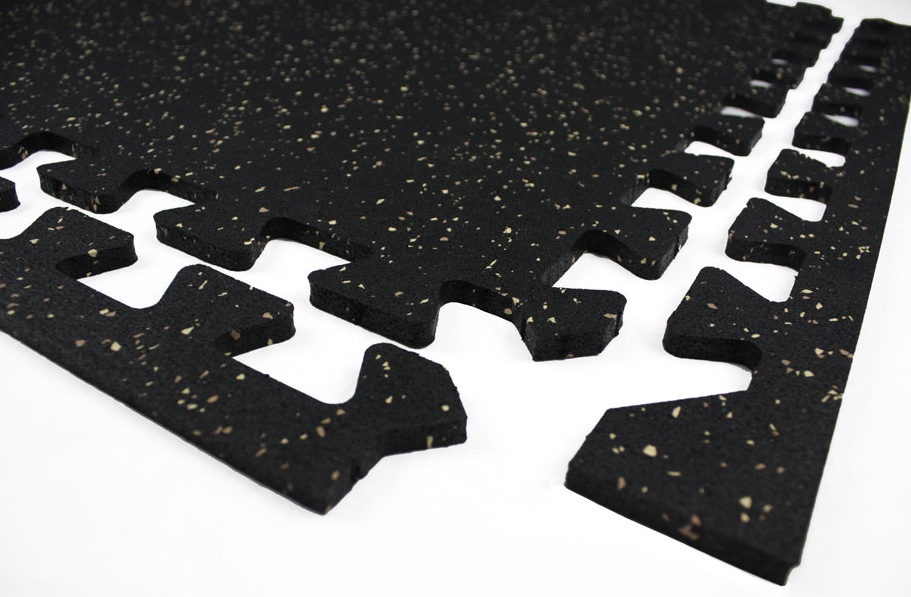
I broke this option down thoroughly in a previous article, so check that out if you’re interested. There are a number of reasons I didn’t go with rubber flooring. First is the appearance. It became clear to me that I definitely did not want to take any risks concerning the look of the floor. I really have no idea how much impact black flooring would have on light reflection, and consequently, video quality. Light colored tiles are available, but they cost about twice as much as the black/gray tiles and I really didn’t want to spend that much money.

Another factor was the installation. Those tiles are incredibly heavy and I’m going to have my hands full just getting my tools in place, tuned up, and working. I really didn’t want to lose a week just for flooring installation.

The final factor was something I can thank many of you for, and that’s the ‘unknown’. Many of you brought up some great points about tool mobility, workbench stability, solvent reactivity, off-gassing, lighting, etc. All of these things made me realize that this was going to be a very expensive experiment. My gut (and the rubber flooring company), tells me everything probably would have been fine, but at this point in the game, I am not willing to do anything that has even a remotely questionable outcome.

Vinyl
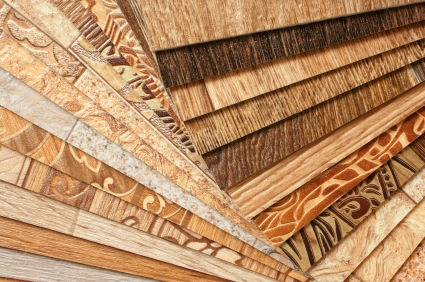
This one was a bit of a long-shot but I did consider it. I had one flooring company come out to give me a price on engineered hardwood, and after hearing my story, the salesman suggested vinyl flooring. He showed me some samples of this nice fiberglass (I think) material that not only looked decent, but had a little cushion to it. This was something I hadn’t even considered before but I was intrigued, so I had him price it out. Now, this could very well be a fluke, but the price was well over $10,000!! And this was a well-known major flooring installer in our area. In addition to the sticker shock, I heard some feedback from folks who mentioned that seams could eventually become an issue with this type of flooring in a high heat environment. With 12′ rolls, we would have three long seams in the shop. So vinyl was out.

Solid/Engineered Hardwood

Generally speaking, solid wood in an occasionally-conditioned work space is just a bad idea. As we all know, wood likes to move. My shop will experience seasonal and daily temperature swings as well and major humidity swings at the end of Summer, and as we are all well aware, this is not good for solid wood.

Engineered hardwood is a little more realistic as it is essentially just fancy plywood. Even then, I had a few installers tell me they wouldn’t recommend this product for an inconsistently-conditioned space like the shop.

In both solid and engineered hardwood, cost was a major factor. If I chose to hire out the installation for the sake of saving time, the cost was just insane. So although this option would have been the nicest to look at, wood movement and cost knocked it out of the contest.

Laminate

I have installed several laminate (Pergo) floors over the years and while they are easy to install and nice to look at, they have a characteristic sound that is very unappealing to me (especially on High Heels Thursdays). Furthermore, a layer of dust on a laminate floor is a one-way trip to the broken coccyx doctor.

Sleepers and OSB or Ply

I know many of you who have this type of floor in your shop and love it. We even posted a guest article on the topic. But there were a few reasons I dismissed it. First, I had serious reservations about popping holes in my brand new concrete slab. I realize a floor like this is supposed to be permanent, but something about that just bugged me. Also, I can be a little lazy, especially when I’m in a rush to get back to woodworking. 1800 sq feet is a LOT of real estate to cover!! And speaking of real estate, the thought of re-sale value did cross my mind. I know it’s crazy to think about that at this stage of the game, but I do like to think ahead. That’s exactly why I had them install a garage door header that I will never use. If I do sell this place one day, it’s a lot more likely to find a “car guy/gal” than a “wood guy/gal”. And a plywood floor probably wouldn’t be very appealing to potential buyers.

Epoxy + Rubber Mats
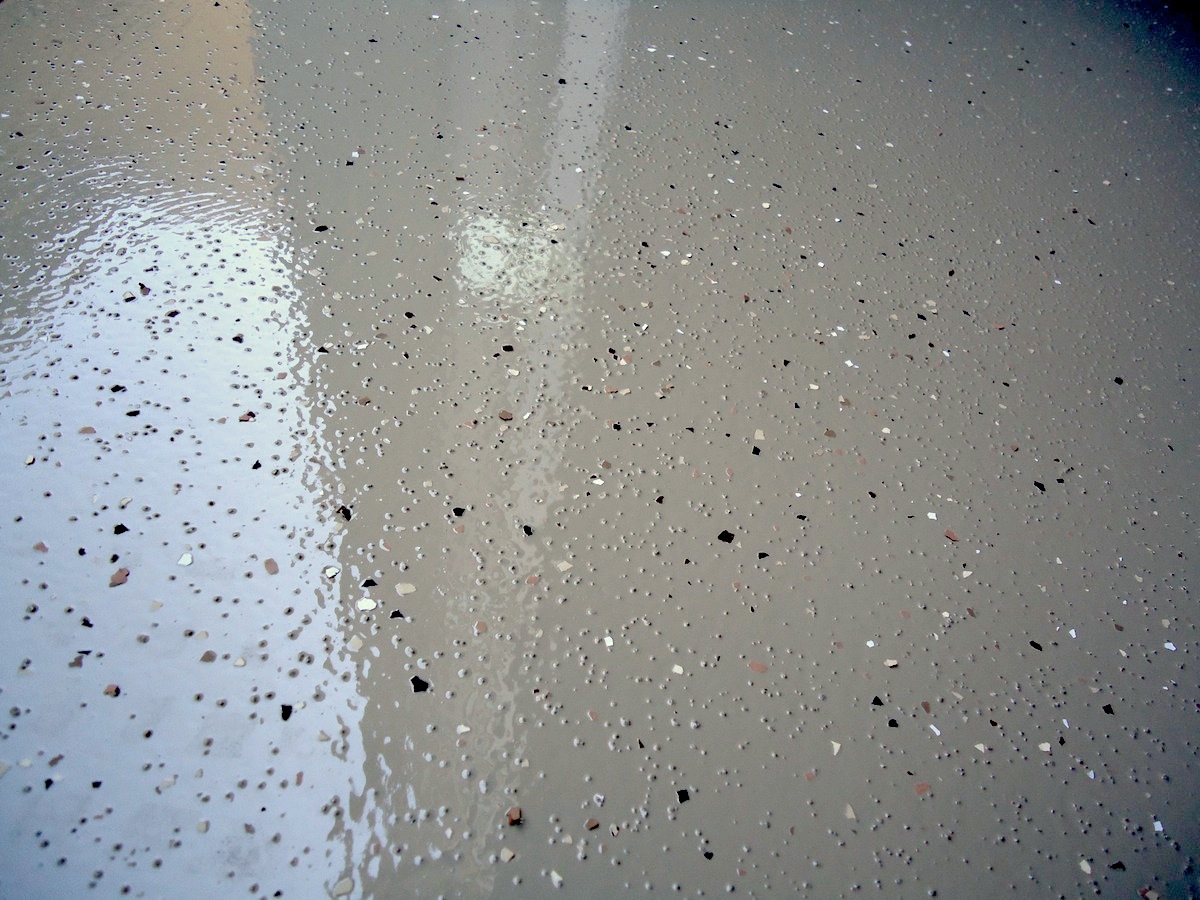
And now for the big winner. The decision on this came after a visit to my parents house. They have a small one-car garage with an epoxy coated floor. They only have a few fluorescent lights in the garage but whenever you turn them on, the space just looks bright and cheery. In my current garage, I have a crap-ton of light but I just don’t get the same effect from unfinished concrete. So epoxy wins major points for appearance.

I discussed re-sale value above and an epoxy floor is a no-brainer in that area. Just about anyone would prefer an epoxy floor over an unfinished concrete floor.

There is no doubting the durability and protective qualities of epoxy. Professionally installed with high-grade materials, these floors last a long time and I’m sure it will stand up to just about anything I can dish out.

Cost was quite reasonable, coming out to about $2.40 installed. This included non-slip grit and those little flakes they like to apply.

The one area where epoxy fails miserably is comfort. Obviously, it does nothing to soothe my weary bones. So that’s where the rubber mats come in. Just like in the old shop, I’ll use rubber mats around the various tool zones. Perhaps I’ll even do an entire area where I know there will be heavy traffic. This way I can pick up the pads if and when I need to move the tools.

The one caveat here is that I am pretty much done with the cheap interlocking pads from the big box store. They are way too light and flimsy and I would like a more “semi-permanent” placement. So this brings me back full-circle to the rubber flooring company. Their mats are thick, heavy, and aren’t likely to move when vacuumed.

So once again, I appreciate the feedback from everyone. I am sure that many of you may disagree with my decision or even my logic. But that’s OK. If we all agreed unanimously on anything, that would be spooky. I hope my explanations and ramblings help you in your own shop flooring adventures.

Category: The Shop

Comments

  1. Adam Muhle October 12, 2012

    I think you should have gone with an unfinished dirt floor! :-P

    The garage header in the wall is somewhat amusing to me because I’ve contemplated doing the exact same thing should I get to build a shop some day. :)

  2. Ken Barnes October 6, 2012

    I think this is a good compromise. There are so many options that this seems the best and you can always change in the future if you like.

  3. Steve October 5, 2012

    I have just repainted a concrete floor in my office space with epoxy coating. About 10 years ago I used a coating from a big box store which looked ok for about 6 months. This time I purchased from Durall floor coatings http://www.concrete-floor-coatings.com/
    It is professional grade material and they are very helpful to the DIY market. They have a full set of youtube videos regarding preparation and application.

    Epoxy is the best, quality products are out there and easy enough for the DIY market.

  4. Tom October 5, 2012

    Mark, the epoxy floor looks great and should serve you well. I am wondering what the cost was for an acid stained and sealed floor v. the epoxy? I think for a shop space your choice was wise given the light reflection and appearance of the floor. Look forward to more projects from the new shop! Hope Mateo and Nicole are well, too.

  5. Stephens_Shop September 27, 2012

    Marc, I will keep my comments relatively short. I had to do some significant work in getting my workshop floor into shape as it had a drain that was sloped down from all sides by about 6.75″. That basically left about 1/3 of my shop unusable for my tools on casters design (small shop). Long story short… after removing the drain, building up the floor then using a self leveling topping, I capped it all off with epoxy.

    I LOVE IT! Best move I ever made, it is easy to clean, provides consistent lighting and is extremely durable.

    Nice choice!

    Stephen.

  6. Jon Fischer September 27, 2012

    What were the differences you heard about the DIY epoxy and the stuff the professionals use? Does the difference come in the quality of epoxy, or in the ease of application or the durability? If you have any further reading about the differences, could you post the links? I just saw a neighbor who put it in his garage, and have started poking around to learn more about it for my garage, but anything you could add would be helpful.
    Thanks. Jon

    •  

      The differences are in quality and long-term viability. Of course a pro tends to prep the surface a little more effectively than a novice too, which plays a big role. But I have no details or references on the subject. Just passing on what I’ve heard.

  7. daniel drabek September 27, 2012

    Not only is an epoxy surface abrasion resistant, but it’s moisture impervious. Anything you spill on it, won’t soak in. And that includes oil.
    It probably makes no difference in Arizona, but in places where ground water can be obtrusive, it also prevents wicking of moisture upward during rainy season, which can eventually rust your machinery.
    DD

  8. Sean O September 26, 2012

    Hey Marc,
    I think you made the right decision here. Epoxy(when done right) can take a beating and it looks rather confettyish. And who doesn’t like confetti, well except the cleaning crew after the Macys day parade.Anti-fatigue mats in the right spots should do the trick. If your still worried about fatigue just find a nice nook in the shop to put a comfy sofa or tie a hammock between your bandsaw and jointer.

  9. Paul Sikorski September 26, 2012

    I have a rubber floor and until today have pretty much loved it . But I purchased a 20 inch planer that weighed in at 800lbs. Not so compatible with the rubber floor. Which I find surprising as it in my garage and I haven’t had problems with pulling cars in and floor jacks. I guess the 800 lbs is a little to much. Great choice on the floor the guy I got my rubber floor from went to an epoxy floor himself.

  10. Cal September 26, 2012

    I put DIY epoxy on my shop floor two years ago, and I have no complaints. As you mentioned, it brightens the place up, and I particularly like how easily it sweeps up.
    Walking on concrete doesn’t seem to bother me (I consistently wear good quality work boots, mind you) so I haven’t put down any mats. I’m a bit of a fumble-foot, though, so I’m reluctant to introduce anything that could become a tripping hazard near my tools. ;-)

    • Brian Aust September 26, 2012

      I was wondering how easy it is to sweep up with the flakes and grit in there?

      •  

        I actually don’t sweep. Vacuum only. :) But I’ll let you know how that goes too.

      • Cal September 27, 2012

        I sweep mine all the time, and have no problems. I have the flakes only, no grit. The flakes embed themselves in the epoxy pretty well. In addition to adding some visual appeal, they also help to break up the visual field and disguise any irregularities in the concrete.

  11. Shawn Nichols September 26, 2012

    Marc,

    I read about these in a FWW article.

    http://www.matsmatsmats.com/co.....e-mat.html

    They aren’t cheap but I put one in front of my workbench and they do wonders for my back. It’s a great site.

    Here’s the article:

    http://www.finewoodworking.com.....x?id=33753

    Good luck!

  12. Skip September 25, 2012

    I like your choice and think it is best for your application, especially with filming. You can always do anti-fatigue mats. I also think it will add valve to resale.

  13. Byrdie September 25, 2012

    Well reasoned and well thought out choices.

    I keep seeing people mention horse stall mats. As someone who has horses and has used horse stall mats for their intended purpose I’d steer you away from them. First of all, they sound like an economical alternative but they’re really not that much less. Second, consider their intended purpose. An average horse is 1200 to 1500 lbs. The stalls mats are meant to support that type of weight. They are much firmer than fatigue mats. Finally, the stall mats are fairly heavy and difficult to move for cleaning – I used to drag them out of the barn and just hose them down – an all day affair that totally wore me out after 6 stalls and 10 mats.

    Good luck with the new shop, now get to making some sawdust!

  14. Good choice.

  15. Nick September 25, 2012

    Seems like the best of both worlds, protection with the epoxy and comfort with the rubber mats where ever you need them!

  16. Martin Robitaille September 25, 2012

    I’ve heard somewhere that the newly poured concrete needs to dry for some time before you can apply epoxy, otherwise the epoxy doesn’t hold and will peel off. I did try it in my own garage, and I don’t know if the slab wasn’t dry enough, but I have some peeling in some area. I would suggest getting confirmation on this. I live in Canada, definatly not desert conditions, so you may be ok.

    Can’t wait to see the shop completed.

    • Dr. Ron (http://www.cprwiz.com) September 25, 2012

      Mr. Robitaille is absolutely correct. Not only does the floor itself have to “cure” pursuant to the epoxy manufacturers directions, but the epoxy’s application and drying must take place in temperatures as recommended by the manufacturer as well. Failure to follow the manufacturer’s directions can, indeed, result in peeling and other disfiguration and can also void any warranties. I live in Wisconsin (which is a Native American word for, “We’re too stupid to move to a warmer place”) and so we had to crank up the shop heating system for, if I remember correctly, some time before and 48 hours or so after the epoxy was applied.

    •  

      The slab had about two months to cure before the epoxy was applied. In our climate, we should be ok. I also hear there is a big difference between what we have available to us as homeowners and the stuff the pros apply. I have heard lots of bad stories about DIY jobs. That’s why I decided to avoid it all together.

      • Dr. Ron (http://www.cprwiz.com) September 25, 2012

        Great! You’ll be happy that you had it applied by the pros. We had our contractor do it and could not be happier with the results.

    • James September 25, 2012

      Hi,

      Having worked in the construction industry for a while the rule of thumb is 1 month per inch slab depth. Though it varies on environmental conditions especially temperature and relative humidity. There are a couple of ways to directly measure the moisture content. See http://www.concreteconstructio.....loors.aspx

      James

      •  

        Spoke with the epoxy guy today. He says around here, 30 days is pretty standard on a newly poured slab. He also said he has never done this work anywhere but here in the valley so he imagines the cure requirement would vary widely from one region to another, as you indicated.

        • James September 26, 2012

          Sorry, didn’t mean to cause panic, talking to my dad (Mechanical Engineer on Hydro Dams) he said that in dry climates the greater problem is keeping the concrete cool and moist during the cure, aften using water sprinklers. I think the rule of thumb is for a temperate coastal climate. Local knowledge often knows best!

  17. Jeff Merrill September 25, 2012

    Seems like the right choice to me, for a concrete floor that seems like the best solution as far as looks and convenience. Rubber mats at key locations will definitely be a good idea for the body when standing for long periods of time. I am very excited to see the complete outcome of your new shop as I have a dream of having a new shop one day as well.

  18. Dr. Ron (http://www.cprwiz.com) September 25, 2012

    Epoxy is a great choice. I did the same last fall when my shop was being constructed. I went with plain, light gray, but omitted the little flakes (the ones in the epoxy; my relatives are still allowed in!) because, as a previous commentator mentioned, it is simply camouflage for small fasteners, wires and parts. They did add a light “gritting” for traction, though. I did not want white as it would always look filthy and darker colors make the space look smaller and impair lighting efficiency. Light gray seemed a good compromise and it has worked out very well. I actually had them double-coat it for durability, a decision that has since paid off many times over after multiple dragging and dropping incidents. And, yes, rubber mats are necessary if you want to avoid back/knee/foot/leg problems. Epoxy does not make the floor softer. Best wishes for continued success and enjoyment in your new shop!

  19. Shannon Huber September 25, 2012

    The problem with the flakes you sprinkle on the epoxy is if you work with a project on the floor, the color of the flakes can rub off onto your wood project. You may want to opt for adding a little sand to the epoxy paint for traction, and skip adding the flakes.

  20. Seth Hoover September 25, 2012

    Your logic seems sound to me! I have a bare concrete floor, with no mats or anything. Every now and then I start getting tired and a piece slips out of my hand and falls straight to that concrete. Can’t tell you how many shop days have ended with “oh great, now I have to re-sand that tomorrow.!”

    I definitely need to rethink my floor…

  21. Jack in TN September 25, 2012

    The Epoxy is a good solution. If I had a shop your size, I might consider not doing the ENTIRE floor in any one method, but Epoxy or even a acid washed and sealed concrete would be a good base and to use for most of the floor.

    The Rubber in specific areas, or if you want wood try cork flooring tiles. Even indoor/outdoor carpet floor tiles. The cork or carpet would be good in a desk/office area.

    Just my idea. Whatever you do is right for you.

  22. I think you will like the epoxy.

    At my work, we recently built an optics lab that is probably about the size of your shop and we originally wanted to just seal the concrete and leave it at that because of the need for cleanliness. But somebody in a position of authority decided it needed to look better and so we went with this stuff and it does indeed look much more pleasant.

    But those little speckles mean that if you drop anything like a screw, it’s a bugger to find. That speckle pattern is like camouflage for small dropped parts. I pretty much have to take my shoes off and walk around barefooted to find them.

  23. John Fitz September 25, 2012

    That’s a well thought out plan. We have some of the heavy black rubber tiles in our exercise room, but it’s not very big and lighting is not that much of an issue. I’ve seen a lot of garages with the epoxy floor and they do look sharp. The non-slip grit is a must.

    The comment on high heel thursdays also caught my interest – haha. No doubt that’s what keeps your calves in such good shape.

  24. jlaviolette September 25, 2012

    While my garage is a dedicated shop, space is a concern and a lot of tools are mobile. Can anyone comment on how epoxy will hold up to having things dragged all over it? I know cars drive over it, but that is relatively gentle as tires have a wider contact patch and more even weight distribution than casters. My slab is still really clean and in nice shape.

  25. Brandon WesT September 25, 2012

    My dad has epoxy in his garage and we give it hell. Four years later……. Still looks great. Will absolutely hold up to saw dust and a few tool drops (Heaven forbid)..

  26. Great article. When I was putting the flooring in my shop, I did some agonizing over the floor. It’s a basement shop in a new house, with insulation and a vapor barrier beneath the slab, so I didn’t need to worry too much about warmth or humidity coming from the floor. I thought about getting some shop-grade white oak, but it cost more than I wanted to spend.

    I was worried about the affects on my back from standing on a concrete floor for hours on end. So I did install exterior plywood on sleepers to give me just a bit of “bounce”. But that just didn’t look good enough. So I decided to cover the plywood with vinyl composition tile (VCT). These are 1ft x 1ft square tiles made of vinyl material. In terms of durability, just head over to your local grocery store. You’ll find VCT on the floor there. Foot traffic all day, every day, and they just need a coat of wax to refresh their appearance. And the price was right: about $.65 a square foot for the tiles at the local borg.

    The floor looks fine. It isn’t slippery. And it has held up well for the last couple years. I agree that vinyl sheets are not ideal for a shop floor. But VCT tiles might be worth considering.

  27. Patrick Schupbach September 25, 2012

    Good choice for flooring…. Thinking ahead for buyers is a wise choice!! The rubber mats will give you flexability….

  28. Bob September 25, 2012

    I think that you end up with the ideal solution. Thank you for sharing your analyse with us. I will certainly read this article again when the time come to finish my workshop floor. Tomorrow is the big day for you. Good luck and have fun!

  29. Mark Loughran September 25, 2012

    Looks like a great decision Marc!! Best of luck with moving in and getting started, and great article as always. Shop will be awesome!!

    Epoxy flooring – excuse my ignorance, but don’t you paint it on, or is it a roll of stuff?

    One word of caution, look out for trip hazard at edges of rubber mats! Don’t ask me how I know :-) :-)

    Yeah… ‘High Heels Thursdays’, think you might need to explain that one :-) LOL
    (or perhaps that will feature in the first video from the new shop :-)

  30. ron howes September 25, 2012

    Concerning floor mats- has anyone tried using horse stall rubber mats such as this http://www.tractorsupply.com/r.....11;2219003

    They are obviously heavy duty!

    Ron

  31. I think that after extensive deliberation, weighing up all the pros and cons, you have come up with a solution that is suitable for your needs.

  32. I personally think its the best choice. 90% of the factory’s I go to have the same combination and it really is the most durable and easiest to clean. Plus if you are thinking of future resale, it’s pretty cheep to freshen up and have gleaming again.

    Also from the point of light refraction it really does have an excellent diffusing effect which does help reduce harsh reflection and shadowing.

    Well done. You can have a biscuit :) look forward to drooling enviously over the pictures when it’s done :)
    Alex.

  33. Hello. Great article.
    I also have light problems in my shop (still undergoing building construction) and you gave me important insight. Thanks
    Did you check out the wooden rubbert tiles ? they look great. I have it as a roole that my shop is a wood shop and plastic bins and stuff is a no no. But these looked so darn good I am going to try them.
    http://www.rubberflooringinc.c.....-tile.html

    Where did you buy the epoxy and flakes? I need to buy all online since I live in Norway.

    Once again thanks for the well written article.

    T.Robertsen

    •  

      I think those are similar to the ones I used previously. A little light-duty for my tastes. As for the epoxy, I hired out the job. From what I understand, there’s a pretty big difference between what most of us can buy and what the pros use.

  34. Great choice. In my next shop i’m going to try all three. Sleepers(not anchored to floor),OSB,epoxy and foam pads.

  35. PatL September 24, 2012

    I went with a 1-Part epoxy floor myself, love it. Very durable. But enough talk about floors, are you ready for the Pandaria launch? :)

    • PatL September 24, 2012

      And you may want to look at, believe it or not, rubber stall mats designed for horse stables.
      They are available at most feed/tack stores. They are very large, heavy but durable and you can cut them to whatever size you like.

    •  

      I need to get some play time in today for sure!

  36. Johnny September 24, 2012

    Very timely post. I’ve been thinking of epoxy for my floors. It’s nice to see all this info in one place and I agree completely – the epoxy will transform a space. The amount of perceived light is unbelievable compared to a concrete floor. We did my dad’s shop a few years back and it’s some of the best money he’s spent for that space.

    Johnny

  37. Peter Durand September 24, 2012

    Well written article and the best solution in my humble opinion.

    Cheers,

    Peter

  38. Legoman September 24, 2012

    Um, High Heels Thursdays?! No one else has commented on this, so what am I missing? Is this a Wood Whisperer ritual?

  39. Jon McGrath September 24, 2012

    Sounds good to me, I think the “Reality” of any choice is re-sale ability. Nothing is guaranteed these days – meaning this is the last shop you will work in, you will never leave. This option promotes the best of both worlds with a good floor left in place if relocated and the expense of mats is something you can take with you. I like the wood floors best – but this would be something most of us would have to rip up in our garages if we moved. Thanks for all the ins and outs Marc.

  40. Dave September 24, 2012

    Marc,
    Having gone thru all the same mental circles myself just two years ago, reading your shop articles is like dejavu for me. Soon you’ll have plenty of doubts about a decision you made here and a decision you made there and wonder if you should have done some more research or changed your design around. Don’t worry though, in about six months you will look back and realize that your shop is perfect. And it will be perfect because of all the mental circles your going thru now.

    And you’re right, no floor is perfect. We each have to choose which is best for our situation and I like the choices you’ve made. We’re all looking forward to seeing the shop complete.
    Dave

  41. Tom Pritchard September 24, 2012

    Great choice. I agree with the pads located in certain work zones.

  42. Alex September 24, 2012

    Great summary of your choice. Did you consider the dricore subfloor as a non permanent alternative to osb or ply? One possible downside could be stability but an otherwise interesting non permanent alternative for someone who is looking for an osb floor.

  43. Dean September 24, 2012

    Great choice Marc! I would use a wooden duckboard or two along with the rubber mats. Good for foot comfort and it gets a little wood on the floor.

  44. Texfire September 24, 2012

    I’ve had epoxy on my floor and have been happy with how it’s held up with heavy castered objects and motorcycle tires. It’s worn well for over three years now. I picked up some horse stall mats, but I’m not 100″ happy with that. I’d like some interlocking ones that can be placed around a workbench and along counter-spaces. Be interested to see what you decide in that front.

  45. Matt September 24, 2012

    Glad you made a choice. I know that if I could empty my garage and start with a clean slate, this would be the route I would go. Probably best to get the epoxy on a new clean floor anyway. Can’t wait to see the final product. I am sure it will be fantastic.

  46. Brian September 24, 2012

    So exciting. I’m planning my shop (that might happen in five years) and taking your considerations into account. I’ll probably ask how you like the floor in five years :)

  47. Fong (http://Tool-torials.com) September 24, 2012

    Nice write-up of common options.

    I’ve got epoxy too. It’s endured over 4 years so far with no permanent scars. It’ll endure just about anything being dragged or spilled on it. But, it doesn’t like excessive heat so no shooting sparks onto it while grinding/cutting steel or welding near it. Keep it clean with some Simple Green

    Colors: keep in mind that choosing grey with black and white flakes will make any dropped screw vanish. Ask me how I know? =)

  48. Joel September 24, 2012

    Sounds good to me.

Leave a reply

XHTML: You can use these tags: <a href="" title=""> <abbr title=""> <acronym title=""> <b> <blockquote cite=""> <cite> <code> <del datetime=""> <em> <i> <q cite=""> <strike> <strong>

*

Online project based woodworking education.

3 Membership types

  • A la Carte
    Starting at $25/project
  • Subscription
    $129/year
  • Superfan Subscription
    $299/year
Learn more →

Simple Varnish Finish DVD

Coming Up


  • Top & Assembly - Video

    June 21, 2013
  • Finish - Video

    June 25, 2013
  • Wood Talk Live

    June 26, 2013 - 4:00 pm MT
  • Post Alternative Spiral - Video

    June 28, 2013
  • Post Alternatives - Baseball Bat - Video

    July 5, 2013
clearvue-200x200
bellforest200x200-tww10